


What's Happening?
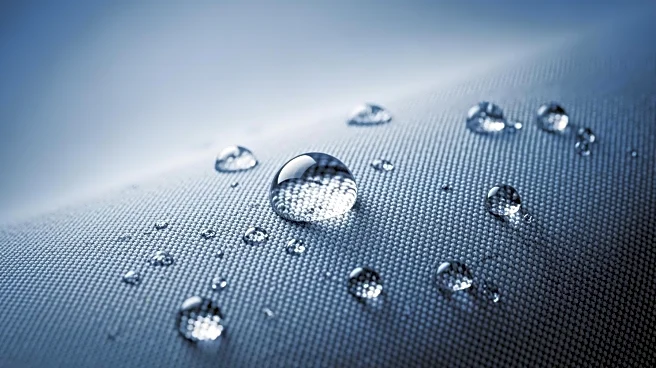
A team of researchers, including Lei Wu, Dezhao Hao, and Zhichao Dong, have developed a new method for creating superhydrophobic textiles that maintain their water-repellent properties even under mechanical and environmental stress. This innovation, reported
in Nature Communications, involves a one-step molecular assembly strategy that forms a durable superhydrophobic shell directly on individual fibers. The method, known as MARS, was tested on various everyday items such as T-shirts, leggings, and shoes, all of which demonstrated superior performance in water-impact spray tests compared to conventionally treated fabrics. The versatility of the MARS method was highlighted by its effectiveness across a range of materials, including both natural and synthetic fabrics.
Why It's Important?
The development of robust superhydrophobic textiles has significant implications for industries reliant on protective clothing, outdoor gear, and industrial applications. Traditional methods often involve surface coatings or fluorinated chemistries that degrade quickly, reducing the lifespan and effectiveness of the textiles. The new approach offers a more durable solution, potentially reducing costs and increasing the reliability of products in harsh conditions. This advancement could lead to broader applications in sectors such as military, healthcare, and sports, where durable water-repellent materials are crucial.