



What's Happening?
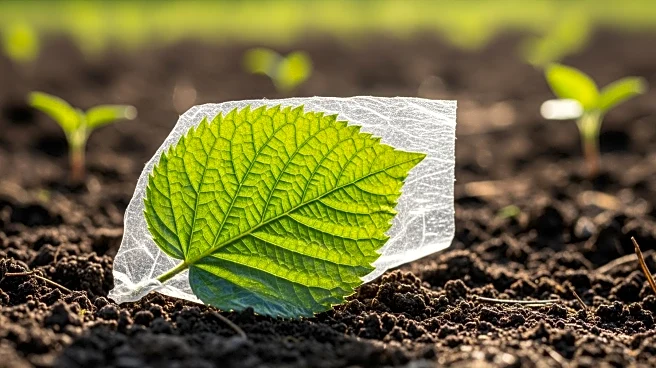
The University of Münster, the University of Applied Forest Sciences Rottenburg, and the nova-Institute have launched the PerPlacsBio project, focusing on the potential of biodegradable plastics in agriculture and forestry. Funded by the Agency for Renewable Resources, this initiative seeks to address the environmental impact of microplastics by promoting biodegradable alternatives. The project aims to provide practical guidance for reducing plastic inputs into soils and to assess the feasibility of biodegradable options. The nova-Institute will expand the knowledge base on bio-based plastics, while the universities will conduct surveys to understand user needs and barriers. The project builds on the BioSinn initiative, which identified products
where biodegradation is beneficial. PerPlacsBio will involve stakeholders from industry, academia, and policy to discuss alternative materials and measures, with findings shared through workshops and public reports.
Why It's Important?
The PerPlacsBio project is significant as it addresses the pressing issue of microplastic pollution in agriculture and forestry, sectors that are crucial for environmental sustainability. By promoting biodegradable plastics, the initiative could lead to reduced pollution and healthier ecosystems. This project also supports the transition to sustainable practices, aligning with global efforts to combat environmental degradation. The involvement of multiple stakeholders ensures that the solutions developed are practical and widely applicable, potentially influencing policy and industry standards. The project's outcomes could lead to increased adoption of biodegradable materials, reducing reliance on traditional plastics and fostering innovation in sustainable materials.
What's Next?
As the PerPlacsBio project progresses, the consortium will continue to engage with stakeholders to refine and implement biodegradable solutions. Workshops and public reports will disseminate findings, encouraging evidence-based decision-making in policy and industry. The project's success could lead to broader adoption of biodegradable plastics in agriculture and forestry, influencing regulations and market dynamics. Future research may focus on expanding the range of biodegradable products and improving their performance and cost-effectiveness. The project's outcomes could also inspire similar initiatives in other sectors, contributing to a more sustainable future.