


What's Happening?
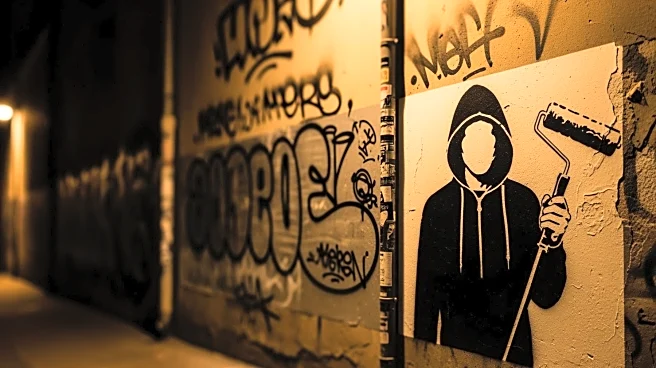
A comprehensive investigation by Reuters has reportedly uncovered the true identity of the elusive street artist Banksy. The investigation suggests that Banksy is Robin Gunningham, a 52-year-old man from Bristol, who now goes by the name David Jones.
This claim aligns with previous reports from the Mail on Sunday nearly two decades ago. The investigation involved tracing Banksy's activities from Ukraine to New York and London, uncovering a 2000 New York Police Department report where Gunningham was fined for disorderly conduct. The report also connects Robert Del Naja of Massive Attack as a possible collaborator or enabler of Banksy, with both having traveled to Ukraine around the time Banksy artworks appeared on bombed buildings there.
Why It's Important?
The revelation of Banksy's identity could have significant implications for the art world and the public's perception of the artist. Banksy has maintained anonymity for decades, contributing to his mystique and the value of his work. If confirmed, this revelation could impact the market value of his art and alter the narrative surrounding his pieces. Additionally, the connection to Robert Del Naja and the use of a common name like David Jones to maintain anonymity highlights the lengths to which Banksy has gone to protect his identity. This investigation may also influence how street art is perceived, potentially affecting legal and cultural discussions about the art form.
What's Next?
If the claims are substantiated, there could be legal and financial repercussions for Banksy, particularly concerning past legal issues and the ownership of his works. The art community may also see shifts in how street art is valued and authenticated. Furthermore, Banksy's response to these claims, or lack thereof, will be closely watched by both fans and critics. The investigation may prompt further inquiries into the identities of other anonymous artists, potentially leading to more revelations in the art world.
Beyond the Headlines
The investigation raises questions about the ethics of unmasking anonymous artists and the impact on their creative freedom. Banksy's anonymity has allowed him to critique societal issues without personal repercussions, a freedom that could be compromised if his identity is confirmed. This situation also highlights the tension between public curiosity and an individual's right to privacy, especially in the digital age where information is more accessible. The cultural significance of Banksy's work, often seen as a voice for the marginalized, may be reevaluated in light of these revelations.