

What's Happening?
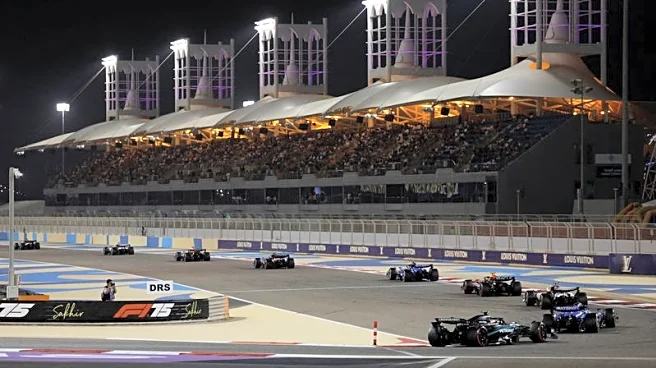
Formula 1 has announced the cancellation of its scheduled grands prix in Bahrain and Saudi Arabia due to escalating conflict in the Middle East. The decision follows a US-Israeli attack on Iran on February 28, which has led to retaliatory strikes by Iran in several
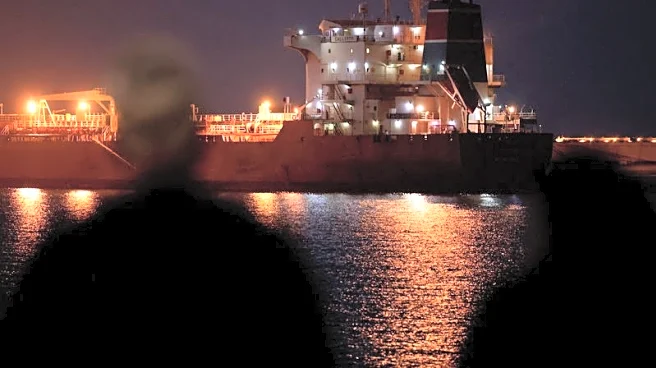
countries, including Bahrain and Saudi Arabia. The Bahrain International Circuit was set to host a race on April 12, followed by the Jeddah Corniche Circuit in Saudi Arabia on April 19. However, the ongoing regional instability and security concerns have forced the championship to call off these events. Bahrain's airspace remains closed, and recent attacks have targeted fuel storage tanks near its airport. This cancellation creates a significant gap in the Formula 1 calendar, with no races between the Japanese Grand Prix on March 29 and the Miami Grand Prix on May 3.
Why It's Important?
The cancellation of these races highlights the broader impact of geopolitical tensions on international sporting events. Formula 1, a global motorsport series, faces financial repercussions due to the loss of race fees from Bahrain and Saudi Arabia, which are significant contributors to the championship's revenue. The decision also underscores the challenges of organizing international events in conflict-prone regions, where security and safety concerns can abruptly alter plans. For the teams and sponsors involved, the cancellations mean potential financial losses and logistical challenges. Additionally, the situation reflects the interconnectedness of global events, where political and military actions can have far-reaching effects on industries such as sports and tourism.
What's Next?
Formula 1 will continue to monitor the situation in the Middle East, particularly as it has other races scheduled in the region later in the year, including in Qatar and the United Arab Emirates. The championship organizers, led by CEO Stefano Domenicali, have expressed their intent to return to Bahrain and Saudi Arabia when conditions allow. In the meantime, the focus will be on ensuring the safety of teams and personnel while maintaining the integrity of the racing calendar. The gap in the schedule may prompt discussions about potential replacement events or adjustments to the season's structure.