








What's Happening?
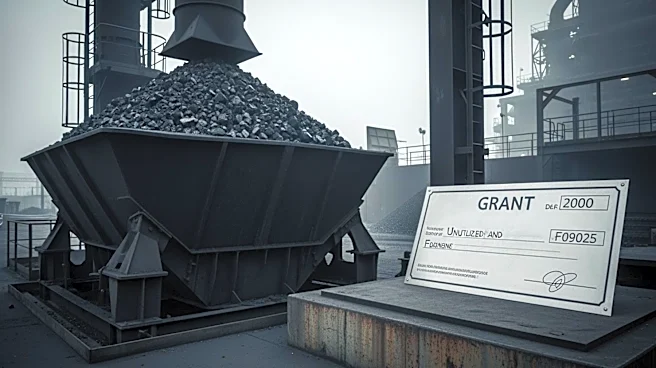
Cleveland-Cliffs, a major steel manufacturer, has applied for an air permit to continue using fossil fuels at its Middletown, Ohio plant, despite previously receiving over $500 million from the U.S. Department of Energy to decarbonize. The company initially
planned to replace its coal and coke-fired blast furnaces with electric ones powered by hydrogen, a move expected to cut 1 million tons of greenhouse gas emissions annually and create jobs. However, the company has shifted focus, citing a lack of hydrogen availability, and is now planning to refurbish its existing blast furnace and install a co-generation plant to capture and reuse excess gas. This decision has raised concerns among residents and environmentalists about the potential environmental impact and the use of public funds intended for decarbonization.
Why It's Important?
The decision by Cleveland-Cliffs to potentially abandon its decarbonization plans in favor of continuing coal use has significant implications for environmental policy and industrial practices in the U.S. The move could undermine efforts to reduce carbon emissions in the steel industry, a sector targeted by the Biden administration for decarbonization. The use of public funds for projects that do not align with their intended purpose raises questions about accountability and the effectiveness of government incentives. The outcome of this situation could influence future policy decisions and the willingness of companies to engage in sustainable practices.
What's Next?
The Ohio Environmental Protection Agency has yet to decide on Cleveland-Cliffs' permit application. A 30-day public comment period will be held once a draft permit is available, and a public hearing may be scheduled if there is sufficient interest. Community advocacy and public pushback could impact the company's plans. Additionally, the use of the $500 million grant remains uncertain, as it is unclear if the funds can be repurposed for the new project. The Natural Resources Defense Council has sued the Department of Energy for transparency regarding project terminations and funding allocations.