



What's Happening?
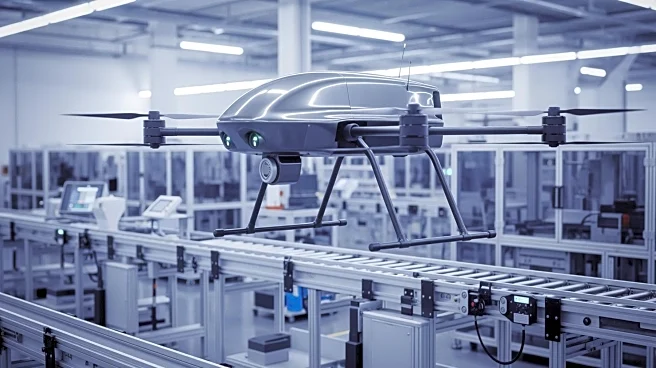
Jaguar Land Rover (JLR) has initiated a trial of drone technology at its Electric Propulsion Manufacturing Centre (EPMC) in Wolverhampton. The use of Flyability’s Elios 3 drone has significantly reduced machinery and site inspection times by up to 95%. This drone can access high or confined spaces, which previously required elevated platforms, thereby reducing risks for maintenance teams. The drone streams a live 3D map of the facility, aiding in early issue identification and minimizing maintenance-related downtime. Nigel Blenkinsop, Executive Director of Industrial Operations at JLR, emphasized the importance of this trial in transforming factory operations and improving employee safety. The initiative is part of JLR’s broader strategy to integrate
advanced technologies into its manufacturing processes.
Why It's Important?
The implementation of drone technology at JLR represents a significant shift towards more efficient and safer manufacturing practices. By reducing inspection times and maintenance downtime, JLR can optimize its operational efficiency and reduce costs. This move also aligns with JLR’s commitment to upskilling its workforce in digital technologies, ensuring employees are equipped to handle future technological advancements. The initiative supports JLR’s Future Skills plan, which aims to train thousands of employees in electrification and digital capabilities, crucial for the company’s long-term competitiveness in the automotive industry.
What's Next?
Following the successful trial at EPMC, JLR plans to extend the use of drones to its Logistics Operations Centre in Solihull. Here, drones will be equipped with barcode scanners to automate inventory checks, further enhancing accuracy and safety. This expansion is part of JLR’s £18 billion investment program over five years, focusing on electrification and digital transformation. The company’s Open Innovation program will continue to explore new technologies to support these goals.
Beyond the Headlines
The integration of drone technology into JLR’s operations not only improves efficiency but also contributes to environmental sustainability. The drones’ ability to detect overheating components and insulation failures supports energy optimization, helping JLR reduce operational emissions. This initiative reflects a growing trend in the automotive industry to leverage technology for both operational and environmental benefits.