






What's Happening?
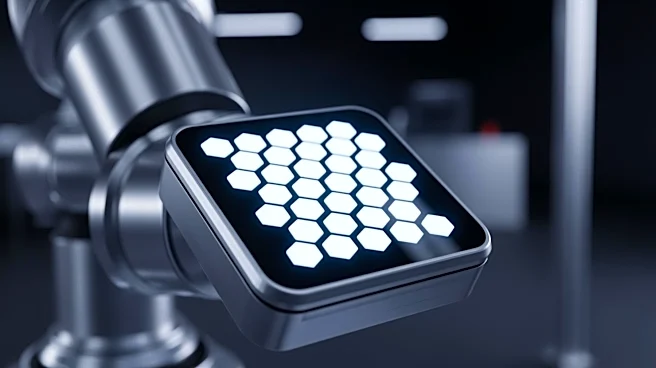
XELA Robotics has announced two significant enhancements to its uSkin sensor family, which will be showcased at the upcoming Robotics Summit & Expo in Boston. The first enhancement is magnetic interference compensation, which reduces complex magnetic interference from
nearby magnets or ferromagnetic materials. This feature is crucial for handling metals in industrial settings. The second development is the implementation of CAN FD (Controller Area Network Flexible Data-Rate), a high-speed communication protocol that allows for more sensor modules on the same data line without sacrificing frequency. These advancements aim to improve the performance and versatility of XELA's tactile sensors, catering to the needs of the U.S. market and beyond.
Why It's Important?
The enhancements to XELA Robotics' uSkin sensor family are vital for advancing the capabilities of robotic systems, particularly in industrial applications where precision and reliability are paramount. By addressing issues such as magnetic interference and communication efficiency, XELA is responding to the demands of the robotics industry for more robust and adaptable sensor solutions. These improvements can lead to more efficient manufacturing processes, reduced downtime, and enhanced safety in environments where robots interact with metal components. The developments also highlight the growing importance of tactile sensing technology in the evolution of robotics.
What's Next?
XELA Robotics plans to make the enhanced sensors available for immediate order, with deliveries starting in May 2026. The company will continue to showcase its technology at industry events, including the Robotics Summit & Expo, to engage with potential customers and partners. As the robotics industry evolves, XELA may explore further innovations in sensor technology to meet emerging challenges and expand its market presence. The company could also collaborate with other technology providers to integrate its sensors into more complex robotic systems, enhancing their functionality and application scope.