






What's Happening?
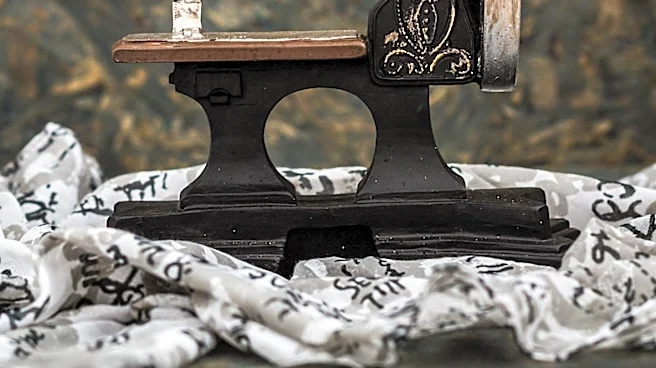
Paul Seddon and his daughter, who live in the U.K., discovered a letter inside a vintage Singer sewing machine they purchased from an antique shop. The letter, found in the machine's base, detailed the history of the sewing machine, which was manufactured
in 1885 and belonged to Amy Louise Dutton. The machine was used to make bunting for World War II celebrations. Seddon, who typically uses such machines for art projects, was surprised by the find and is now reconsidering whether to dismantle it for art. The discovery has sparked interest in the machine's history and its connection to the past.
Why It's Important?
The discovery underscores the emotional and historical value of vintage items, which can connect people to past generations and events. For Seddon and his daughter, who uses art therapy to manage a rare genetic disorder, the find adds a layer of personal and historical significance to their work. Art therapy is known to provide mental health benefits, such as reducing depression and anxiety, and enhancing self-esteem. This story highlights how art therapy can be enriched by incorporating historical narratives, offering both therapeutic and educational benefits.
What's Next?
Seddon is contemplating whether to preserve the sewing machine as a historical artifact or proceed with his original plan to use it in an art project. The decision will likely consider the machine's historical value and the personal connection it has fostered. The interest generated by the discovery may also lead to further exploration of similar vintage items, potentially uncovering more hidden histories. Additionally, the story may inspire others to explore art therapy as a means of connecting with history and enhancing mental well-being.
Beyond the Headlines
The story illustrates the broader implications of art therapy, particularly how it can be used to bridge personal and historical narratives. The integration of historical artifacts into art therapy can deepen the therapeutic experience, providing a sense of continuity and connection to the past. This approach may encourage more people to engage with art therapy, recognizing its potential to offer both psychological and cultural enrichment. The discovery also raises questions about the preservation of historical artifacts and the role they play in contemporary therapeutic practices.