






What's Happening?
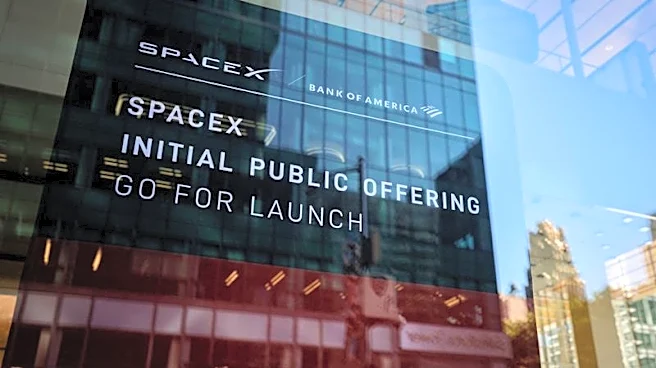
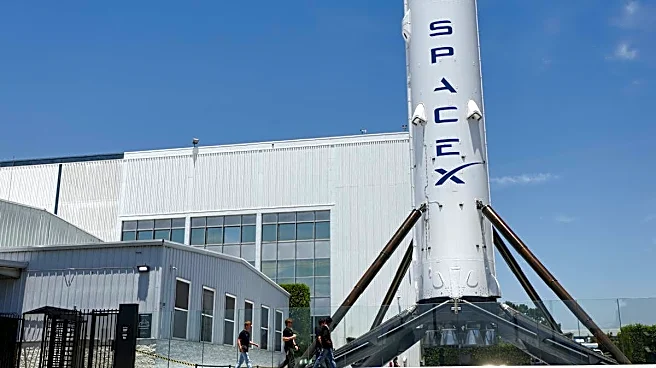
SpaceX, co-founded by Elon Musk, is set to make a historic debut on the Nasdaq exchange with its initial public offering (IPO) on Friday. The company has priced over 555 million shares at $135 each, aiming to raise $75 billion, which would make it the largest
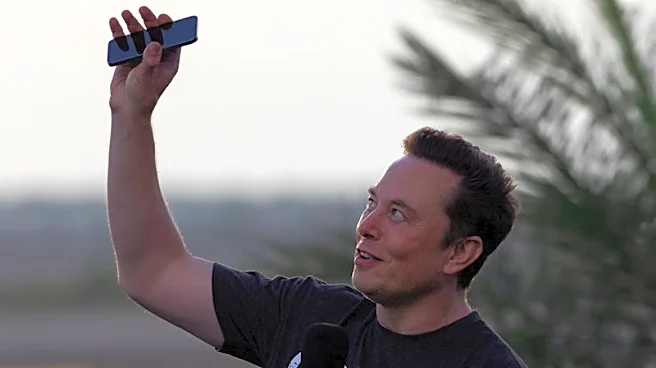
IPO in history. The offering is more than four times oversubscribed, with significant interest from both major financial institutions and retail investors. SpaceX's IPO includes Musk's xAI company and the X social media platform, formerly known as Twitter. The IPO is expected to significantly increase Musk's wealth, potentially making him the world's first trillionaire.
Why It's Important?
The SpaceX IPO is a pivotal moment for the tech and aerospace industries, showcasing the market's confidence in Musk's vision and leadership. The massive valuation and demand underscore the potential of SpaceX's projects, such as reusable rockets and space-based data centers. The IPO's success could influence other tech companies considering public offerings, setting a benchmark for future valuations and investor expectations. The allocation of a significant portion of shares to retail investors reflects a shift towards broader market participation, although it also highlights the challenges of accessing high-demand IPOs.
What's Next?
As SpaceX begins trading, the focus will shift to its ability to execute its ambitious projects and meet investor expectations. The company's plans for space exploration and AI development will require substantial resources and innovation. The IPO's impact on Musk's wealth and influence could also affect his other ventures, such as Tesla and Neuralink. The market will monitor SpaceX's performance closely, as it could have broader implications for the tech and aerospace sectors. Additionally, the IPO may pave the way for other tech giants like OpenAI and Anthropic to enter public markets.