






What's Happening?
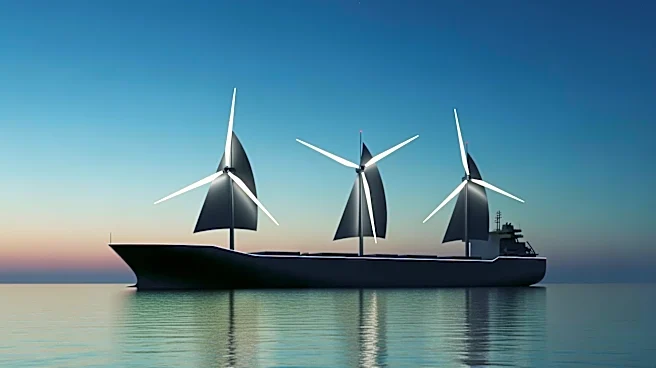
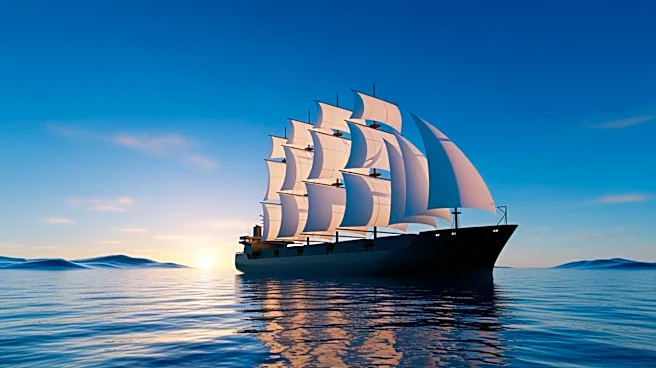
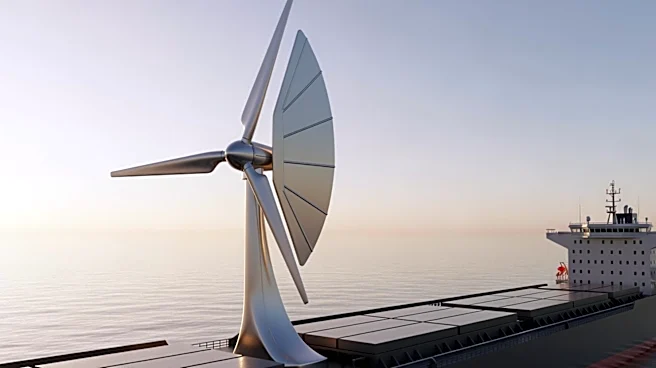
Mitsui O.S.K. Lines (MOL) is advancing its efforts to reduce greenhouse gas emissions by implementing wind-assisted propulsion systems on its vessels. The company has developed the 'Wind Challenger,' a rigid sail system that automatically adjusts to wind conditions.
This system has been installed on the Kurotakisan Maru III, an 89,999 dwt coal carrier, marking the first retrofit of its kind. The Wind Challenger was previously installed on the Shofu Maru and Green Winds, resulting in significant reductions in fuel consumption and emissions. MOL is also working on a new design for a liquefied CO2 carrier, featuring three Wind Challenger units, in collaboration with Samsung Heavy Industries. This design has received Approval in Principle from ClassNK, highlighting its potential for safe and efficient operation.
Why It's Important?
The implementation of wind-assisted propulsion systems by MOL represents a significant step towards reducing the maritime industry's carbon footprint. By decreasing fuel consumption and emissions, these innovations contribute to global efforts to combat climate change. The maritime sector is a major source of greenhouse gases, and advancements like the Wind Challenger can help meet international environmental targets. MOL's commitment to installing these systems on 25 vessels by 2030 and 80 by 2035 aligns with its goal of achieving net-zero emissions by 2050. This initiative not only supports environmental sustainability but also positions MOL as a leader in green shipping technology, potentially influencing industry standards and practices.
What's Next?
MOL plans to continue expanding the use of wind-assisted propulsion systems across its fleet. The company aims to install the Wind Challenger on a significant number of vessels in the coming years, with a target of 25 installations by 2030 and 80 by 2035. This expansion will likely involve further collaborations with shipbuilders and regulatory bodies to ensure the systems' effectiveness and safety. As the maritime industry faces increasing pressure to reduce emissions, MOL's advancements could prompt other companies to adopt similar technologies, accelerating the transition to more sustainable shipping practices.