










What's Happening?
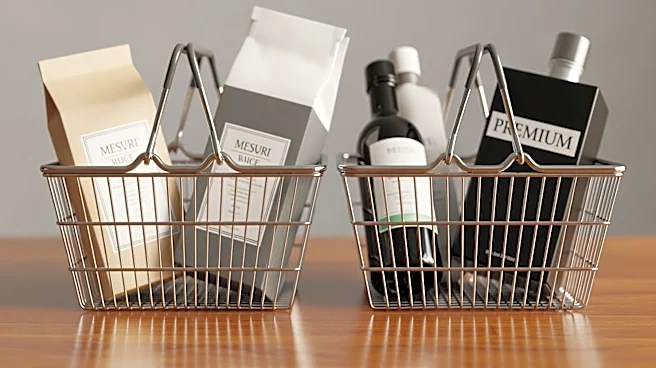
Consumer Reports has released an analysis indicating that American families can save significantly by opting for store-brand products instead of name-brand items. The report suggests that switching to private label products can save the average family
about $5,000 annually. These savings are particularly notable in grocery items, where store brands offer 25 to 30 percent discounts on products like pasta, coffee, and orange juice. In personal care items, savings can reach between 35 and 50 percent. The analysis also included taste tests, where store brands like Kroger's creamy ranch dressing and Aldi's condensed chicken noodle soup outperformed their name-brand counterparts, Hidden Valley Ranch and Campbell's, respectively.
Why It's Important?
The findings from Consumer Reports are significant as they challenge the perception that higher prices equate to better quality. With inflation affecting grocery prices, consumers are looking for ways to reduce expenses without compromising on quality. Store brands offer a viable solution, providing similar or better quality at a lower cost. This shift could impact consumer behavior, encouraging more people to choose private labels, which could lead to increased competition among brands and potentially drive down prices further. Retailers like Kroger and Aldi are capitalizing on this trend by offering money-back guarantees, making the switch to store brands even more appealing.
What's Next?
As more consumers become aware of the potential savings, retailers may expand their private label offerings to meet demand. This could lead to increased competition among store brands and name brands, potentially resulting in price adjustments and marketing strategies aimed at retaining customer loyalty. Additionally, Consumer Reports will continue to track pricing trends through its Price Tracker tool, providing ongoing insights into the cost-effectiveness of store brands versus name brands.
Beyond the Headlines
The shift towards store brands may have broader implications for the retail industry, including changes in marketing strategies and product development. As consumers prioritize value over brand loyalty, companies may need to innovate and improve their offerings to maintain market share. This trend could also influence the regulatory landscape, as the FDA's requirement for identical formulations in over-the-counter medications ensures that consumers receive the same quality regardless of brand.