



What's Happening?
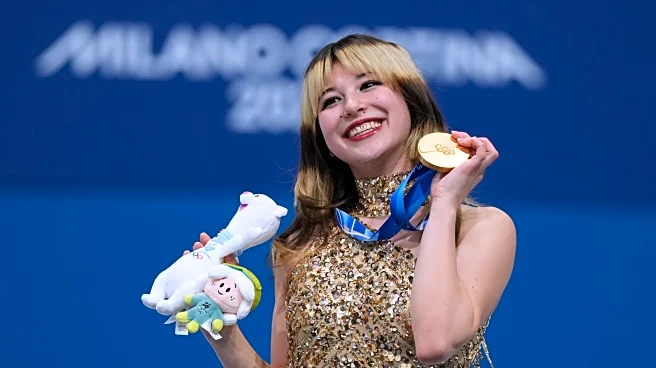
Alysa Liu, a prominent figure skater, has undergone a significant transformation in her career, moving away from a highly regimented training environment to embrace a more joyful and self-directed approach. Liu, who began her skating career at a young age, achieved remarkable success early on, becoming the youngest women's national title-holder at 13. Despite her achievements, Liu felt overwhelmed by the demands of her sport, which included intense training and external pressures from coaches and family. Her journey reflects a classic hero's narrative of challenge, separation, and return, as she sought to reclaim her authentic self. Liu's decision to distance herself from her father's coaching and to craft her own style has allowed her to rediscover
the joy in skating, culminating in a gold medal at the 2026 Winter Olympics.
Why It's Important?
Liu's story highlights the pressures faced by young athletes in competitive sports, where the pursuit of excellence can often overshadow personal well-being and enjoyment. Her decision to take control of her career and prioritize her happiness is significant in a sports culture that frequently emphasizes results over personal fulfillment. This shift could inspire other athletes to seek balance and autonomy in their careers, potentially leading to broader changes in how sports organizations and coaches approach athlete development. Liu's journey also underscores the importance of mental health and personal agency in achieving long-term success and satisfaction in sports.
What's Next?
As Liu continues her career with a renewed focus on joy and self-expression, she may influence the figure skating community and beyond to adopt more athlete-centered approaches. Her success could encourage other athletes to advocate for their needs and challenge traditional coaching methods. Additionally, Liu's story may prompt discussions about the role of family and external pressures in sports, leading to more supportive environments for young athletes. The broader sports community may also take note of Liu's achievements and consider how to foster environments that prioritize both performance and personal well-being.
Beyond the Headlines
Liu's transformation raises questions about the cultural and ethical dimensions of sports training, particularly for young athletes. Her experience with the Chinese government's attempts to recruit her highlights the complex interplay between sports, politics, and national identity. Liu's decision to represent the U.S. despite external pressures reflects broader themes of autonomy and resistance against coercive tactics. Her story also touches on the evolving nature of sports, where traditional expectations are being challenged by athletes seeking to define their own paths.