



What's Happening?
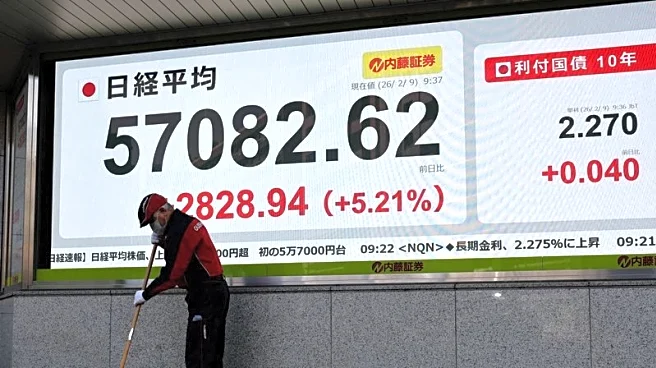
Asian stock markets experienced a rise, led by Japan's Nikkei 225 index, which surged 2.6% following the election of Japan's first female prime minister, Sanae Takaichi. The election result has sparked optimism about potential economic reforms that could boost Japan's economy and stock market. Other Asian markets also saw gains, with South Korea's Kospi increasing by 0.6% and Hong Kong's Hang Seng rising by 1.0%. Meanwhile, the U.S. stock market is dealing with concerns over high stock valuations and the impact of significant investments in artificial intelligence by major tech companies. The S&P 500 and Nasdaq composite both saw gains, while the Dow Jones Industrial Average edged up slightly.
Why It's Important?
The rise in Asian stock markets, particularly in Japan,
reflects investor confidence in the potential economic reforms promised by the new leadership. This development could have significant implications for global markets, as Japan is a major economic player. In the U.S., the focus remains on the Federal Reserve's interest rate decisions, which are influenced by upcoming reports on job market health and inflation. These factors are crucial as they affect borrowing costs and economic growth. The ongoing investments in AI by tech companies also highlight a shift towards technology-driven growth, which could reshape industries and market dynamics.
What's Next?
Investors will be closely monitoring the upcoming U.S. job market and inflation reports, as these could influence the Federal Reserve's interest rate policies. A weakening job market might prompt the Fed to resume interest rate cuts, while high inflation could delay such actions. In Japan, the new prime minister's economic policies will be under scrutiny to see if they deliver the anticipated reforms. The performance of tech stocks, driven by AI investments, will also be a key area of focus as companies seek to justify their spending with tangible profits.