



What's Happening?
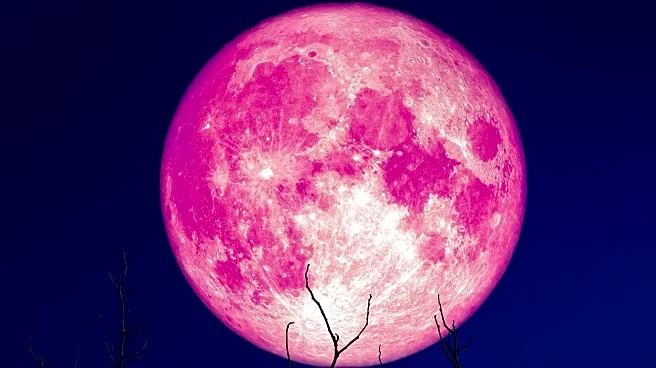
The first full moon of 2026, known as the Wolf Moon, will rise on January 3rd, coinciding with a supermoon event. This astronomical occurrence happens when the moon is at its closest point to Earth, making it appear larger and brighter than usual. The Wolf Moon, named for the howling of wolves during winter, will reach peak illumination at 5:03 a.m. EST. This supermoon is the last in a series of four consecutive supermoons, with the next one not occurring until November 2026. The event offers a spectacular view for skywatchers, with Jupiter appearing close to the lunar disk.
Why It's Important?
Supermoons are significant for both astronomers and the general public as they provide a unique opportunity to observe the moon's features more clearly. This event can inspire
interest in astronomy and encourage people to engage with the night sky. The cultural significance of the Wolf Moon, with its historical and indigenous associations, adds a layer of depth to the experience. For scientists, supermoons can offer insights into the moon's orbit and its effects on Earth, such as tides.
What's Next?
Following the Wolf Moon, skywatchers can look forward to other celestial events throughout the year, including meteor showers and planetary alignments. The next supermoon will occur in November 2026, providing another opportunity for observation. Meanwhile, astronomers and enthusiasts will continue to monitor and study the moon's behavior and its impact on Earth.