



What's Happening?
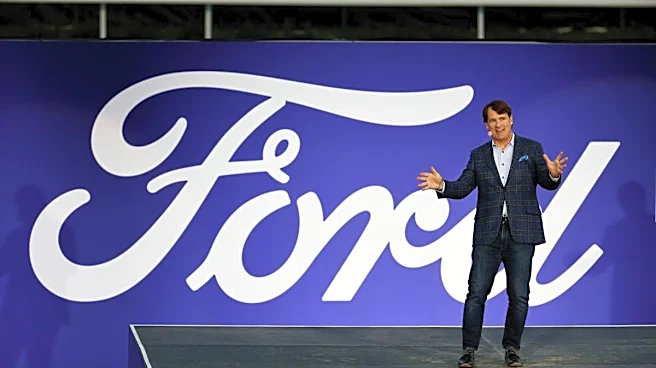
Ford and BMW are under increasing pressure due to the urgent need for battery raw materials, as they navigate the competitive landscape of the automotive industry. Ford is focusing on vertical integration to mitigate geopolitical risks and reduce costs,
particularly as China dominates the market for refined rare earths and magnet production. The company is expanding into the industrial stationary battery energy storage system market through its subsidiary, Ford Energy, with plans to ship these systems from U.S. facilities starting in 2027. Ford has also secured supply agreements with BHP Group and Rio Tinto to ensure a steady flow of raw materials. Meanwhile, BMW is transitioning to a business model centered on its "New Class" electric platform, set to launch in 2025/2026. The company has awarded significant contracts to CATL and EVE Energy to build battery cell factories across Europe, China, and North America. BMW is also working on a pilot project with CATL to account for carbon footprints across borders, aligning with European battery directives.
Why It's Important?
The strategic moves by Ford and BMW highlight the critical importance of securing battery raw materials in the face of global supply chain challenges. As the automotive industry shifts towards electric vehicles, the demand for these materials is expected to surge, potentially leading to supply shortages and increased costs. Ford's and BMW's efforts to establish secure supply chains and expand production capabilities are crucial for maintaining competitiveness and meeting regulatory requirements. These developments could significantly impact the U.S. automotive sector, influencing job creation, technological advancements, and the broader transition to renewable energy sources. The success of these strategies may also affect the global market dynamics, as other automakers may follow suit to ensure their supply chain resilience.
What's Next?
Ford and BMW are likely to continue strengthening their supply chains and expanding their production capacities to meet the growing demand for electric vehicles. Ford's partnership with EDF Power Solutions and its agreements with major mining companies suggest a focus on long-term sustainability and cost efficiency. BMW's collaboration with CATL on carbon footprint accounting indicates a commitment to environmental compliance and innovation. These initiatives may lead to further investments in battery technology and infrastructure, potentially influencing policy decisions and industry standards. Stakeholders, including investors, regulators, and environmental groups, will be closely monitoring these developments to assess their impact on the automotive industry's future.