






What's Happening?
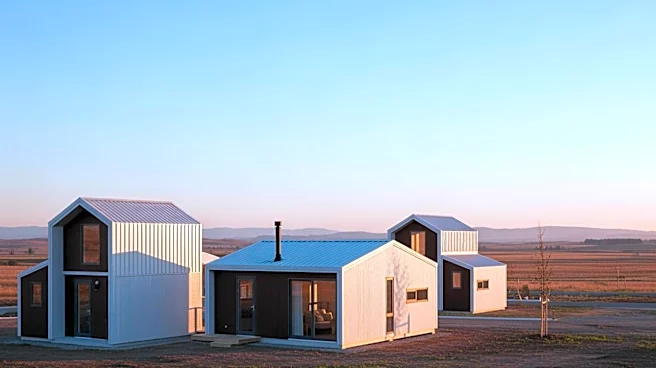
Rio Tinto has announced a $100 million investment to expand fly-in fly-out (FIFO) accommodation in Western Australia's Pilbara region. The project aims to construct 500 additional homes for regional frontline FIFO workers in several towns, including Karratha,
Broome, and Geraldton. This initiative is part of the Government Regional Officer Housing Program, which also benefits state government employees serving regional communities. The investment aligns with the state government's Seven Cities Vision, which seeks to enhance regional infrastructure and services by 2030. Rio Tinto, a major player in the resources sector, is collaborating with BHP and Hancock Prospecting to support this housing development, which follows a previous $250 million funding approval for the Resources Community Investment Initiative.
Why It's Important?
The expansion of FIFO housing by Rio Tinto is significant for several reasons. It addresses the critical need for adequate accommodation for workers in remote areas, which is essential for sustaining the workforce required for large-scale mining operations. By improving living conditions, the project is likely to enhance worker satisfaction and retention, which are crucial for maintaining productivity in the resource-rich Pilbara region. Additionally, the initiative supports the state government's broader infrastructure goals, potentially boosting local economies and providing better services to remote communities. This investment also reflects the ongoing commitment of major resource companies to contribute to regional development, which can lead to long-term economic benefits for the area.
What's Next?
As the project progresses, Rio Tinto and its partners will likely focus on the timely construction of the new homes to meet the 2030 target set by the Seven Cities Vision. The success of this initiative could encourage further investments in regional infrastructure, potentially attracting more workers and businesses to the area. Stakeholders, including local governments and community groups, may engage in discussions to ensure that the development aligns with community needs and environmental considerations. The project could also set a precedent for similar initiatives in other resource-rich regions, highlighting the importance of collaboration between the private sector and government in regional development.