



What's Happening?
A recent analysis has highlighted concerns about the impact of technology on the social skills of younger generations, particularly Gen Z and Gen Alpha. Experts, including JJ Kelly, a licensed clinical psychologist, have observed a decline in essential
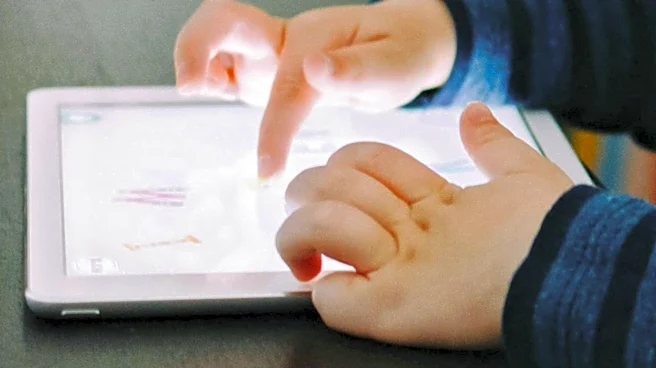
interpersonal skills among children, attributing this trend to the pervasive use of digital devices. The digital age has introduced barriers to face-to-face communication, with children often resorting to screens for interaction, which limits their opportunities to practice real-life social skills such as empathy, conflict resolution, and active listening. Parenting and life coach Randi Crawford notes that digital devices have replaced traditional in-person interactions, leading to a decrease in children's ability to navigate social situations effectively. The report suggests that while technology offers convenience, it also reduces the frequency of real-world interactions necessary for developing these skills.
Why It's Important?
The decline in social skills among children has significant implications for their future personal and professional lives. As technology continues to dominate communication, children may struggle with essential skills like making eye contact, resolving conflicts, and expressing vulnerability in person. These skills are crucial for building healthy relationships and succeeding in various social and professional settings. The lack of practice in real-life interactions could lead to increased social anxiety and difficulties in forming meaningful connections. Moreover, the trend could affect future workforce dynamics, as employers value employees who can communicate effectively and work collaboratively. Addressing this issue is vital to ensure that children grow into well-adjusted adults capable of navigating complex social environments.
What's Next?
To counteract the negative impact of technology on social skills, experts recommend that parents set boundaries around digital device usage and encourage more face-to-face interactions. This includes having open conversations with children about the importance of social skills and providing opportunities for them to practice these skills in safe environments. Parents are advised to model healthy communication behaviors and engage in role-playing exercises to help children develop confidence in their social abilities. Schools and communities can also play a role by creating programs that emphasize interpersonal skills development. By taking proactive steps, parents and educators can help children regain essential social skills and prepare them for future challenges.