







What's Happening?
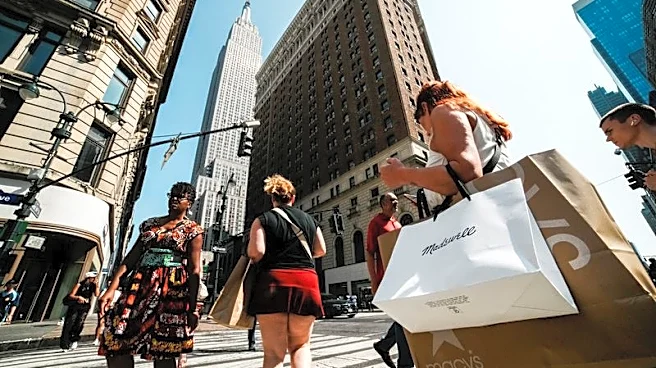
Retail sales in the United States experienced a slowdown in April, growing by only 0.5% compared to a revised 1.6% increase in March. This deceleration is attributed to rising gas prices, which have left consumers with less disposable income for nonessential
purchases such as clothing and furniture. The Commerce Department's data indicates that while sales at gas stations surged, other sectors like department stores and furniture stores saw declines. Online retailers and electronics stores, however, reported solid gains. The ongoing conflict in Iran, which has disrupted oil supplies, is a significant factor behind the rising gas prices. Despite the slowdown, consumer spending remains supported by larger tax refunds, although economists warn that this effect may wane in the coming months.
Why It's Important?
The slowdown in retail sales growth highlights the impact of rising energy costs on consumer behavior and the broader economy. As gas prices continue to climb, consumers may further reduce spending on nonessential goods, potentially affecting various retail sectors. This trend could lead to a shift in consumer priorities, with more emphasis on essential purchases. The situation also underscores the vulnerability of the U.S. economy to global events, such as the conflict in Iran, which can disrupt supply chains and influence domestic economic conditions. Retailers and policymakers will need to monitor these developments closely to anticipate potential challenges in consumer spending and economic growth.
What's Next?
As the effects of larger tax refunds diminish, consumers may face increased financial pressure from rising gas prices. This could lead to a more pronounced decline in discretionary spending in the coming months. Retailers like Walmart and Target are expected to release quarterly financial results soon, which will provide further insights into consumer spending patterns. Additionally, the Federal Reserve and other policymakers may need to consider measures to address inflationary pressures and support economic stability. Businesses may also need to adapt their strategies to accommodate changing consumer preferences and spending capabilities.