








What's Happening?
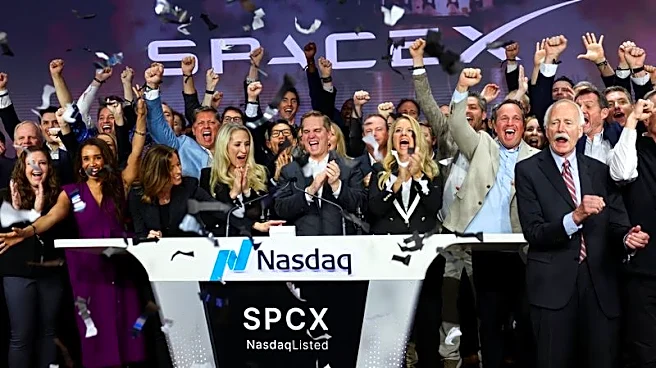
The trading platform Robinhood experienced record user traffic following the public market debut of SpaceX. The high demand led to some delays and outages, although the platform quickly restored operations. SpaceX shares began trading on the Nasdaq exchange,
with the share price rising by nearly 11% shortly after trading commenced. This surge in activity pushed SpaceX's market capitalization over $2 trillion, making Elon Musk the world's first trillionaire. The IPO saw nearly 263 million shares traded within the first hour, amounting to $42 billion in transactions, despite only 4% of SpaceX's shares being offered.
Why It's Important?
The successful IPO of SpaceX and the subsequent trading frenzy on Robinhood highlight the significant interest in high-profile tech companies entering the public market. This event underscores the potential for substantial financial gains and increased market volatility associated with such IPOs. For retail investors, platforms like Robinhood provide accessible avenues to participate in these high-stakes market events. The record traffic also reflects the growing influence of retail investors in shaping market dynamics, as they increasingly engage with and impact the trading of major stocks.
What's Next?
Following the IPO, SpaceX's stock is expected to experience high volatility as the market adjusts to its new public status. Investors will be closely monitoring the company's performance and strategic decisions, particularly in the context of its ambitious space exploration goals. For Robinhood, the challenge will be to manage increased user demand and ensure platform stability during peak trading periods. The success of SpaceX's IPO may also encourage other tech companies to consider going public, potentially leading to a wave of new market entrants.
Beyond the Headlines
The debut of SpaceX on the public market raises broader questions about the valuation of tech companies and the sustainability of their growth trajectories. As more companies with high valuations enter the market, there may be increased scrutiny on their financial performance and long-term viability. Additionally, the role of retail investors in driving market trends could lead to shifts in how companies approach their IPO strategies, potentially prioritizing direct engagement with individual investors over traditional institutional channels.