






What's Happening?
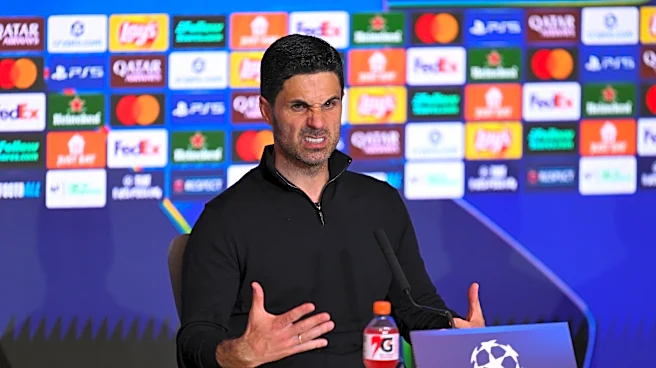
Arsenal Football Club is strategizing to balance its financial books by planning player sales in the upcoming summer transfer window, despite securing over £120 million in UEFA prize money from their Champions League run. The club's financial strategy
aims to comply with the Premier League's new Squad Cost Ratio rule, which limits spending on squad costs to 85% of revenue. Arsenal's recent financial results showed a pre-tax loss of £1.4 million, not accounting for last summer's transfer activities. The club intends to strengthen its squad while ensuring financial sustainability, necessitating player sales to offset new signings. Arsenal's transfer plans include potential sales of senior players and academy graduates, with a focus on maintaining a healthy financial footing.
Why It's Important?
Arsenal's approach underscores the financial pressures faced by football clubs to maintain competitiveness while adhering to financial regulations. The club's strategy reflects a broader trend in sports management, where financial sustainability is prioritized alongside performance. Arsenal's ability to balance its books while strengthening its squad could set a precedent for other clubs navigating similar financial constraints. The club's financial health is crucial for its long-term success, impacting its ability to attract top talent and compete at the highest levels. Additionally, Arsenal's financial decisions could influence market dynamics, affecting player valuations and transfer activities across the league.
What's Next?
Arsenal's transfer activities will be closely watched as the club navigates the summer window. The club's ability to execute its strategy effectively will depend on market conditions and the demand for its players. Successful sales could provide the financial flexibility needed to pursue key targets, enhancing the squad's competitiveness. Conversely, failure to offload players could limit Arsenal's transfer activities, impacting its performance in the upcoming season. The club's financial management will also be scrutinized by stakeholders, including fans and investors, as it seeks to balance short-term success with long-term sustainability.