






What's Happening?
FIFA is actively working to address the revocation of Iran's World Cup group-stage ticket allocation, which was withdrawn just days before the tournament. The World Cup, co-hosted by Canada, Mexico, and the United States, is set to begin soon, with Iran scheduled
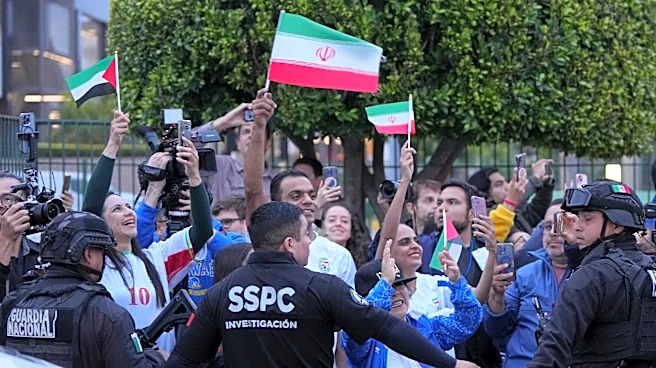
to play matches in Los Angeles and Seattle. The Iranian Football Federation (FFIRI) had already started selling tickets but is now unable to provide them due to U.S. regulatory restrictions, specifically those enforced by the Office of Foreign Assets Control (OFAC). These restrictions have blocked Iran from purchasing tickets, leading to potential resale of the allocation. The situation has sparked criticism from Iranian supporting bodies and raised concerns about political interference in international sports events.
Why It's Important?
The revocation of Iran's ticket allocation highlights the intersection of international sports and geopolitical tensions. The enforcement of U.S. sanctions on Iran, even in the context of a global sporting event, underscores the far-reaching impact of political decisions on cultural and social activities. This situation could affect diplomatic relations and the perception of fairness in international competitions. It also raises questions about the role of non-sporting considerations in the organization of global events. The outcome of FIFA's efforts to resolve this issue will be closely watched by international stakeholders, including sports organizations, governments, and fans.
What's Next?
FIFA's ongoing efforts to resolve the ticket allocation issue will be critical in determining the participation of Iranian fans in the World Cup. The organization may need to negotiate with U.S. authorities to find a solution that allows Iranian supporters to attend matches. The resolution of this issue could set a precedent for how similar situations are handled in the future, potentially influencing the policies of international sports federations regarding political and economic sanctions. Stakeholders will be monitoring the situation closely, as the outcome could have implications for future international sporting events.