


What's Happening?
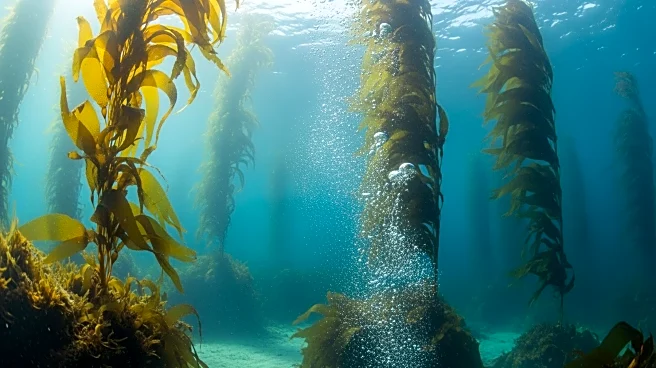
Naas Foods, a company founded by Stevie Dennis, has been expanding its kelp farming operations in Ahousaht territory, north of Tofino, British Columbia. The company, which also processes and sells fish, has been operating a kelp farm for the past year and a half. This farm, the largest in British Columbia, contributed to one-fifth of the company's revenue last year. Dennis projects that kelp will account for 40-50% of the company's revenue this year. The kelp is processed into dried and smoked products, sold in tins, and distributed across the B.C. coast and online in North America. The company plans to open a processing facility in Ahousaht, which will create jobs in the remote community. The kelp industry is seen as a sustainable practice,
promoting growth among the plants harvested, contrasting with traditional fishing methods constrained by conservation measures.
Why It's Important?
The expansion of kelp farming by Naas Foods highlights a shift towards sustainable and innovative agricultural practices. Kelp farming is gaining traction as a viable alternative to traditional fishing, which faces challenges due to conservation measures and catch quotas. The growth of the kelp industry not only provides economic opportunities for coastal communities but also supports environmental sustainability. By creating jobs and promoting economic development in remote areas like Ahousaht, the kelp industry contributes to the diversification of local economies. Additionally, kelp's use in various industries, including agriculture and skincare, underscores its versatility and potential to replace less sustainable ingredients.
What's Next?
Naas Foods plans to continue expanding its market reach and increase its kelp production. The company is set to open a processing facility in Ahousaht, which will initially employ under 10 people, with potential growth to 40 employees as operations expand. This development is expected to further integrate the local community into the growing kelp industry. As the demand for sustainable products increases, Naas Foods and other companies in the kelp industry may see further opportunities for growth and innovation. The industry's expansion could also lead to increased collaboration with First Nations and other stakeholders, promoting sustainable practices and economic development in coastal regions.
Beyond the Headlines
The rise of kelp farming represents a broader trend towards sustainable and regenerative agricultural practices. Kelp's ability to grow rapidly and its use as a bio-stimulant in agriculture make it an attractive alternative to traditional farming inputs. The industry's growth also reflects a shift in consumer preferences towards environmentally friendly products. As kelp becomes more integrated into various industries, it may play a significant role in reducing reliance on petroleum-based ingredients and promoting environmental sustainability. The involvement of First Nations in the kelp industry highlights the importance of indigenous knowledge and practices in sustainable resource management.