








What's Happening?
Jalen Brunson's journey to becoming the NBA Finals MVP culminated in a decisive Game 5 victory where he scored 45 points, leading the New York Knicks to their first NBA title in 53 years. This achievement was rooted in a strategic decision made two years prior
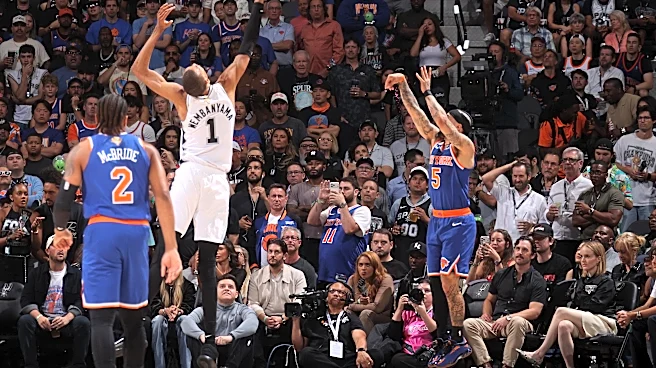
when Brunson opted for a team-friendly contract extension, leaving $112.5 million on the table. This decision allowed the Knicks to build a strong roster around him, ultimately ending their long-standing championship drought. Brunson's performance throughout the finals was exceptional, averaging 32.6 points and 4.6 assists per game, and his leadership was instrumental in outdueling the San Antonio Spurs' young star, Victor Wembanyama.
Why It's Important?
Brunson's decision to prioritize team success over personal financial gain highlights a significant shift in professional sports, where individual sacrifices can lead to collective achievements. This move not only brought the Knicks a championship but also set a precedent for other players considering similar paths. The victory has revitalized the Knicks' franchise, enhancing its reputation and potentially attracting more talent in the future. For the NBA, Brunson's success challenges the conventional wisdom that undersized point guards cannot lead teams to titles, potentially influencing team-building strategies across the league.
What's Next?
Following this victory, the Knicks are likely to focus on maintaining their championship-winning roster while exploring opportunities to strengthen their team further. Brunson's leadership and performance will be central to their strategy moving forward. Other teams may also reevaluate their approaches to player contracts and team composition, inspired by the Knicks' success. The Spurs, on the other hand, will likely focus on developing their young talent, including Wembanyama, to contend for future titles.
Beyond the Headlines
Brunson's story underscores the importance of leadership and teamwork in achieving success. His willingness to take a pay cut for the greater good of the team reflects a broader cultural shift towards valuing collective achievements over individual accolades. This development may inspire other athletes to consider similar sacrifices, potentially leading to more balanced and competitive leagues. Additionally, Brunson's triumph as an undersized player challenges stereotypes and could inspire a new generation of athletes to pursue their dreams regardless of perceived limitations.