






What's Happening?
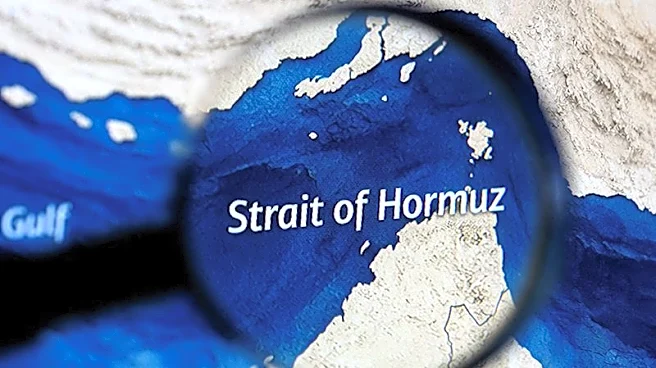
Citrini Research, a Wall Street firm, claims to have sent an analyst to the Strait of Hormuz to observe shipping activity amid escalating tensions. The analyst's findings challenge the prevailing narrative that the strait is effectively shut. According
to the report, vessels are still moving through the strait, with traffic increasing to about 15 ships per day. The firm suggests that the disruption is partial and evolving, rather than absolute. The report indicates that Iran is selectively allowing ships to pass, creating a 'functional checkpoint' rather than a complete blockade.
Why It's Important?
The Strait of Hormuz is a critical chokepoint for global oil transportation, and any disruption can have significant implications for global oil markets. Citrini Research's findings suggest that while there is a disruption, it may not be as severe as initially feared. This could impact oil prices and market stability, as traders reassess the situation. The report also highlights the complexities of the geopolitical tensions in the region and the challenges in obtaining accurate information. The firm's analysis may influence market perceptions and trading strategies.
What's Next?
The situation in the Strait of Hormuz will continue to be closely monitored by global markets. Further developments could lead to changes in oil prices and trading strategies. Diplomatic efforts may be necessary to address the tensions and ensure the free flow of oil through the strait. The findings from Citrini Research may prompt other firms to conduct similar investigations to gain a clearer understanding of the situation. The ongoing tensions could also lead to increased geopolitical risks and impact global economic stability.