


What's Happening?
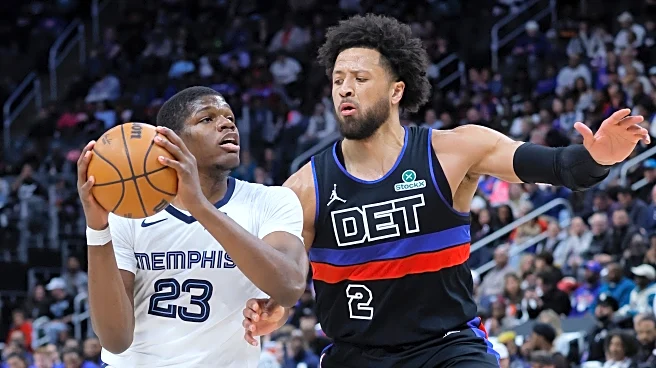
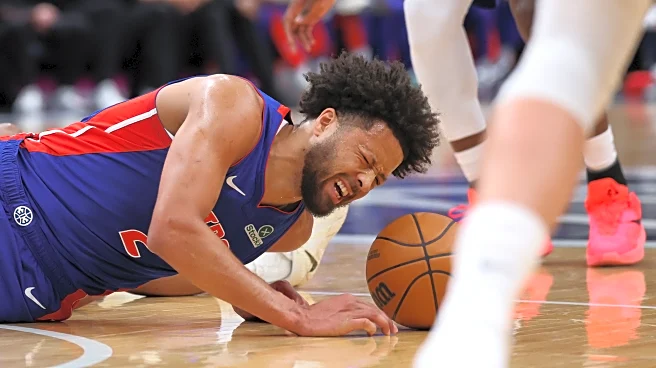
The NBA Players Association (NBPA) has issued a statement calling for the abolition or reform of the 65-game rule, which determines eligibility for postseason awards. This rule has come under scrutiny following the injury of Cade Cunningham, who was on track
for a top-five MVP finish and a First Team All-NBA nod before suffering a collapsed lung. The NBPA argues that the rule unfairly disqualifies players who have had significant injuries from receiving end-of-season honors. Cunningham's agent, Jeff Schwartz, emphasized that the rule should not penalize players for legitimate injuries. The rule was initially implemented to discourage load management by star players, using awards as leverage. However, it has led to complaints from players who feel pressured to return early from injuries to meet the threshold.
Why It's Important?
The 65-game rule has significant implications for players' careers and financial prospects. Awards such as MVP or All-NBA selections can lead to larger contract extensions under the 'Rose Rule' or 'Super Max' criteria. The current rule may force players to risk their health to qualify for these awards, potentially leading to long-term health issues. The NBPA's call for reform highlights the need for a more flexible system that considers the context of injuries. This issue is likely to be a topic of discussion in the offseason, as the league and its owners consider changes to various rules, including those related to tanking.
What's Next?
The debate over the 65-game rule is expected to continue into the offseason, with potential discussions between the NBA, team owners, and the NBPA. Any changes to the rule would require agreement from these stakeholders. The outcome could lead to a more nuanced approach to awards eligibility, balancing the need to discourage load management with fairness to injured players. The league's decision could set a precedent for how player health and performance are evaluated in the future.