
What's Happening?
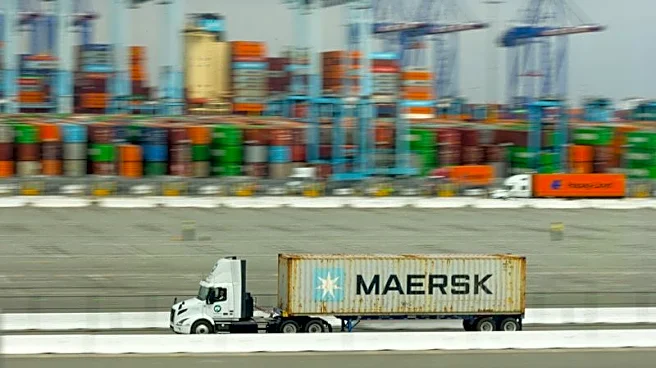
Maersk CEO Vincent Clerc has issued a warning regarding the escalating impact of the U.S.-Iran conflict on global trade, highlighting significant cost pressures that the company is facing. Speaking to
CNBC, Clerc noted that the ongoing war has created a 'new wake-up call' for the shipping industry, with Maersk experiencing a sharp decline in profitability. The conflict has led to a surge in oil prices, particularly due to uncertainties surrounding the Strait of Hormuz, a critical chokepoint for global oil shipments. As a result, Maersk is incurring approximately $500 million in additional costs per month, which the company plans to pass on to its customers. This situation is exacerbated by the energy-intensive nature of the shipping industry, which is now grappling with elevated oil prices and the potential for increased inflation in various economies.
Why It's Important?
The warning from Maersk's CEO underscores the broader economic implications of the U.S.-Iran conflict, particularly for the global supply chain and consumer markets. As one of the world's largest shipping companies, Maersk's increased costs are likely to be reflected in higher prices for goods, potentially leading to demand destruction at the consumer level. This could have a ripple effect throughout the supply chain, affecting industries reliant on shipping and trade. The situation also highlights the vulnerability of global trade to geopolitical tensions, with the potential for prolonged disruptions if the conflict continues. Additionally, the rise in oil prices could contribute to inflationary pressures in various economies, complicating efforts to stabilize markets and maintain economic growth.
What's Next?
Looking ahead, the shipping industry and global markets will be closely monitoring developments in the U.S.-Iran conflict, particularly any progress towards a peace agreement. The potential for a resolution could alleviate some of the cost pressures and stabilize oil prices. However, if the conflict persists, companies like Maersk may need to implement further cost-cutting measures or explore alternative routes to mitigate the impact. Stakeholders, including governments and international organizations, may also need to consider strategies to support the shipping industry and ensure the resilience of global trade. The situation remains fluid, with potential implications for consumer prices and economic stability in the coming months.