





What's Happening?
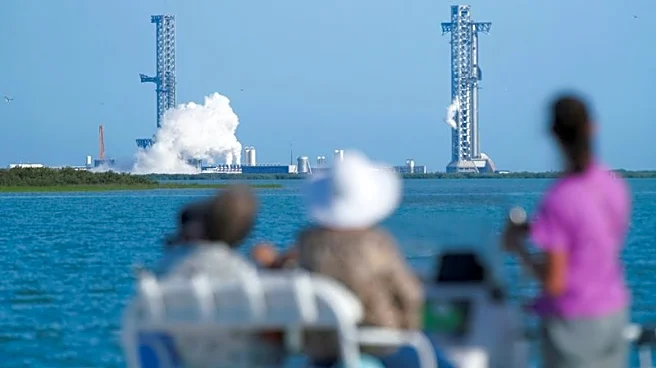
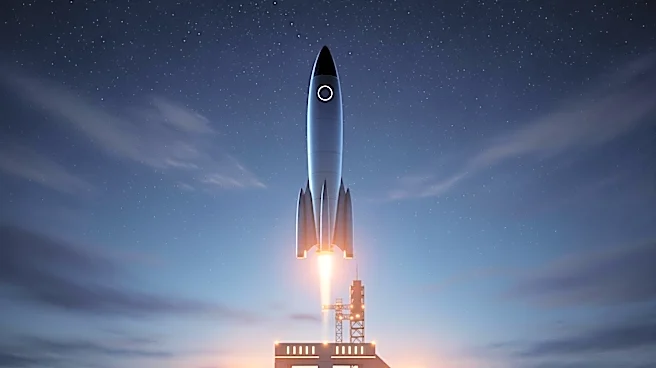
SpaceX successfully completed a full suborbital flight of its latest Starship-Super Heavy launch vehicle, known as Version 3, on May 22. The launch took place from Pad 2 at SpaceX's Boca Chica Beach facility in Texas. Despite the loss of the first-stage
booster shortly after liftoff, the mission achieved several key milestones. The 408-foot-tall rocket lifted off at 6:30 p.m. EDT, following a scrubbed attempt the previous day due to technical issues. The Super Heavy booster, powered by 33 Raptor engines, was expected to perform a boost-back burn and land in the Gulf of Mexico. However, several engines failed to reignite, leading to the booster breaking apart and falling into the ocean. The Starship upper stage, despite losing one of its six Raptor engines, reached a suborbital trajectory and deployed 22 simulator Starlink satellites. The mission concluded with a targeted landing in the Indian Ocean.
Why It's Important?
This test flight marks a significant step in SpaceX's efforts to develop a fully reusable launch system. The successful deployment of simulator Starlink satellites and the demonstration of new systems, such as the integrated hot-staging system, highlight advancements in SpaceX's technology. The ability to simplify engine and vehicle components, as noted by CEO Elon Musk, could lead to cost reductions and increased efficiency in future missions. The test also underscores the challenges of developing reusable rocket technology, as evidenced by the booster loss. The outcomes of this flight could influence future designs and operational strategies for SpaceX, impacting the broader aerospace industry by setting new benchmarks for reusable launch systems.
What's Next?
SpaceX plans to continue refining the Starship and Super Heavy systems, with expectations to complete around 10 more Starships and several boosters this year. The company will likely analyze the data from this flight to address the issues encountered, particularly the booster engine failures. Future test flights will aim to achieve successful booster recovery and further validate the design changes implemented in Version 3. The ongoing development of Starship is crucial for SpaceX's long-term goals, including missions to Mars and other deep-space destinations. Stakeholders in the aerospace industry will be watching closely as SpaceX progresses with its ambitious plans.