


What's Happening?
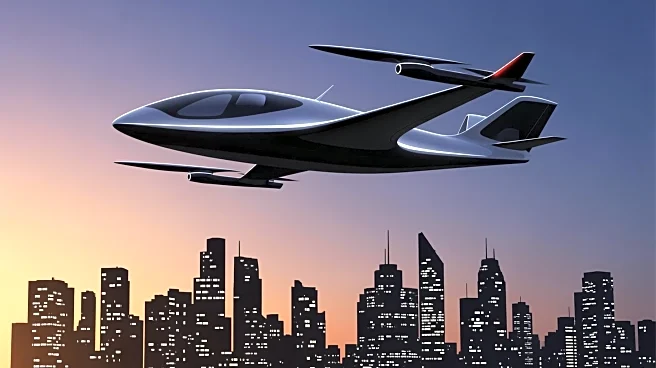
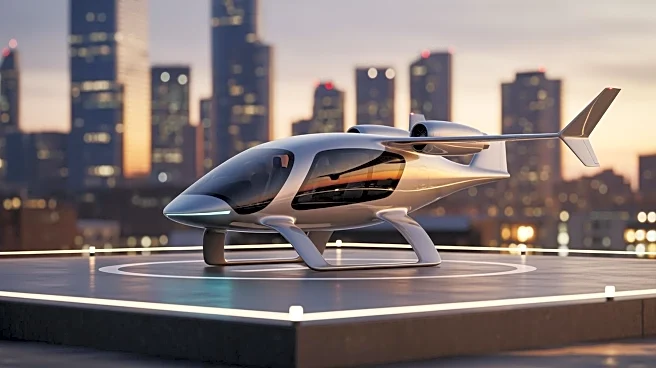
Joby Aviation has successfully completed a series of demonstration flights in the San Francisco Bay Area, marking a significant step towards its commercial service launch. The flights included a piloted crossing from Oakland International Airport to the Golden
Gate Bridge, showcasing the capabilities of its electric vertical take-off and landing (eVTOL) aircraft. This event is part of Joby's 2026 Electric Skies Tour, which aligns with the United States' 250th anniversary celebrations. Additionally, Joby has been selected as a partner in the White House-backed eVTOL Integration Pilot Program (eIPP), allowing it to initiate operations in ten states, including New York, Florida, and Texas. The company has also made strides towards Federal Aviation Administration (FAA) certification, with its fleet accumulating over 50,000 miles in test flights and achieving a successful first flight of a conforming aircraft for type inspection authorization.
Why It's Important?
The completion of these demonstration flights and participation in the eIPP program positions Joby Aviation as a leader in the emerging eVTOL market. This development is crucial for the advancement of urban air mobility, offering a sustainable and efficient alternative to traditional transportation methods. The potential for reduced traffic congestion and lower carbon emissions could significantly impact urban planning and environmental policies. Furthermore, Joby's progress towards FAA certification and its plans to scale production in Dayton, Ohio, underscore the economic benefits, including job creation and technological innovation, that could arise from the expansion of the eVTOL industry in the U.S.
What's Next?
Joby Aviation plans to continue its 2026 Electric Skies Tour, further demonstrating its eVTOL capabilities across the nation. The company aims to achieve full FAA certification, which will enable it to commence commercial operations. Joby is also preparing to scale up production at its new facility in Dayton, Ohio, with a target of producing up to four aircraft per month by 2027. This expansion will likely attract attention from investors and policymakers, potentially influencing future regulations and infrastructure development to support urban air mobility.