



What's Happening?
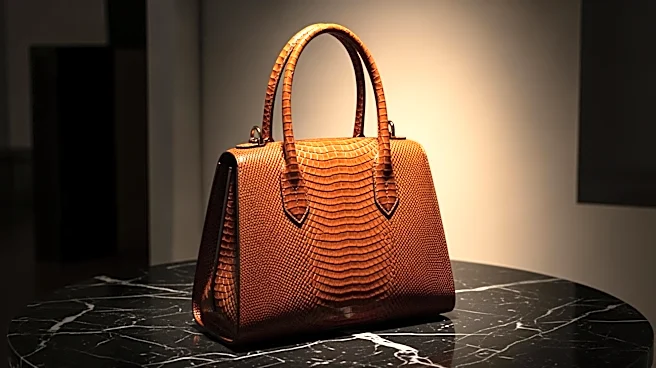
Biotech companies The Organoid Company and Lab-Grown Leather Ltd, in collaboration with creative firm VML, have developed a handbag made from lab-grown leather inspired by reconstructed Tyrannosaurus rex protein sequences. This innovative material, termed
T-Rex leather, is created using AI-assisted biology to synthesize new DNA into specialized cells, mimicking the properties of traditional leather. The handbag, designed by Polish techwear label Enfin Levé, is set to be displayed at the Art Zoo Museum in Amsterdam before being auctioned with a starting bid of £500,000 (approximately $663,000). The development aims to position lab-grown leather as an ultra-luxury material, challenging perceptions of synthetic materials in the luxury space.
Why It's Important?
The introduction of T-Rex leather represents a significant advancement in sustainable material innovation, showcasing the potential of cell-based technology to create ethically sound products. By positioning lab-grown leather as a desirable luxury item, the companies aim to shift consumer perceptions and encourage broader adoption of synthetic materials. This could lead to reduced reliance on traditional leather, which involves environmentally harmful tanning processes. The success of T-Rex leather in the luxury market could pave the way for more sustainable practices in fashion and accessories, potentially influencing industry standards and consumer behavior.
What's Next?
Following the exhibition and auction of the T-Rex leather handbag, the companies involved anticipate increased interest from luxury brands and influencers, which could lead to mainstream acceptance of lab-grown materials. The long-term ambition is to see this innovation adopted more widely across fashion and accessories, potentially transforming the industry. As the technology develops, stakeholders in the fashion industry may explore further applications of lab-grown materials, potentially expanding into other sectors such as automotive interiors and furniture.
Beyond the Headlines
The development of T-Rex leather raises ethical and cultural questions about the use of synthetic biology in consumer products. While the material offers environmental benefits, some critics argue that it lacks authenticity due to the absence of actual T. rex DNA. This highlights the ongoing debate about the role of synthetic materials in preserving cultural heritage and authenticity. Additionally, the high cost of lab-grown leather products may limit accessibility, raising questions about inclusivity in sustainable fashion.