


What's Happening?
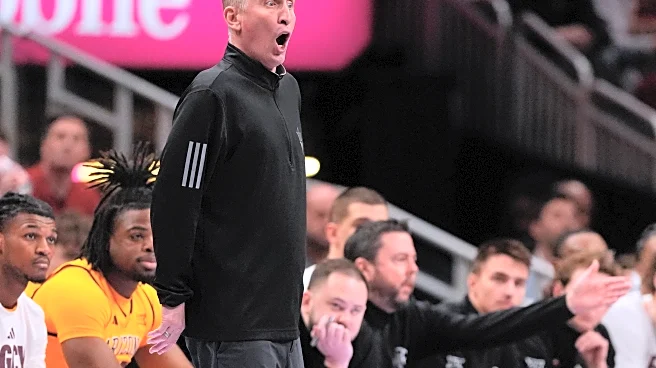
Belmont University has announced that its men's basketball team will not participate in the Postseason National Invitation Tournament (NIT) following the departure of their longtime coach, Casey Alexander. Alexander, who has been with Belmont for seven
seasons, leading the team to 166 wins and four conference titles, has accepted a new position at Kansas State. His new contract is a five-year deal worth $3.3 million for the upcoming season, with annual raises of $50,000. Belmont's decision comes after the team won the regular-season Missouri Valley Conference title but lost to Drake in the conference tournament. The university expressed appreciation for the consideration shown by postseason tournament committees throughout the year.
Why It's Important?
The decision by Belmont University to forgo the NIT highlights the significant impact a coaching change can have on a college basketball program. Casey Alexander's departure to Kansas State represents a major shift for Belmont, which has enjoyed considerable success under his leadership. This move could affect the team's future performance and recruitment efforts, as a new coach will need to be appointed to maintain or build upon the program's achievements. For Kansas State, acquiring a coach with Alexander's track record could enhance their competitive standing in college basketball. The situation underscores the broader dynamics of college sports, where coaching changes can lead to strategic shifts and influence the success of athletic programs.
What's Next?
Belmont University will likely begin the search for a new head coach to lead their men's basketball team. This process will be crucial in determining the future direction of the program. The new coach will need to quickly establish rapport with the team and potentially adjust strategies to align with their coaching philosophy. Meanwhile, Kansas State will integrate Casey Alexander into their program, where his experience and success at Belmont are expected to contribute positively. The transition period for both universities will be closely watched by stakeholders, including players, fans, and the broader college basketball community.