
What's Happening?
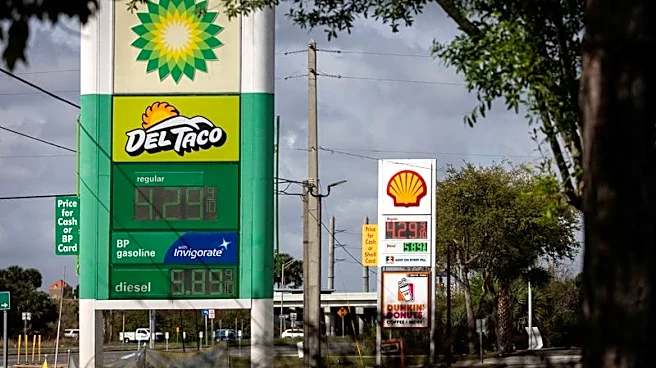
U.S. retail sales experienced a significant increase in March, driven by a record spike in gas prices, according to data from the Commerce Department. Retail sales rose by 1.7%, marking the fastest monthly
growth in over three years. This surge was largely attributed to the war with Iran, which led to the closure of the Strait of Hormuz, a crucial channel for global oil transport. As a result, gas prices soared, causing sales at gasoline stations to jump by 15.5% from the previous month. Despite the increase in gas prices, consumer spending remained robust in other areas, such as furniture and home furnishings, which saw a 2.2% rise. However, some sectors like apparel and restaurants experienced minimal growth, indicating a shift in consumer behavior due to high fuel costs.
Why It's Important?
The rise in retail sales highlights the impact of geopolitical tensions on the U.S. economy, particularly through energy prices. The increase in gas prices affects consumer spending patterns, with lower-income households feeling the pinch more acutely. While tax refunds and savings have temporarily cushioned the blow, prolonged high prices could strain household budgets and dampen economic growth. The situation underscores the vulnerability of the U.S. economy to international conflicts and the importance of energy security. If the conflict persists, it could lead to further economic challenges, including inflationary pressures and reduced consumer spending power.
What's Next?
The duration of the conflict with Iran will be a critical factor in determining the long-term economic impact. If the situation resolves quickly, the economic damage may be limited. However, a prolonged conflict could exacerbate inflation and strain consumer finances, potentially leading to a slowdown in economic growth. Policymakers and businesses will need to monitor the situation closely and consider strategies to mitigate the impact of sustained high energy prices on the economy.