



What's Happening?
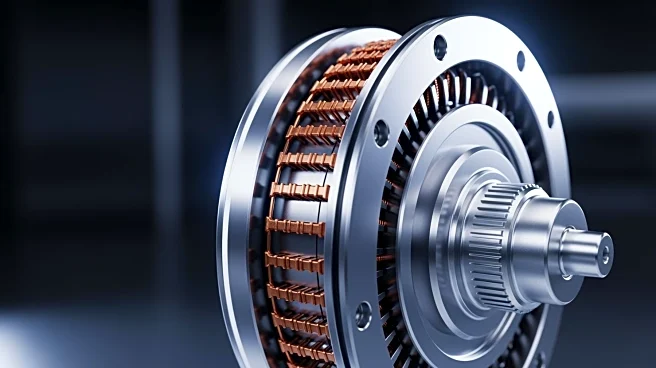
Several automakers, including BYD, Xiaomi, and GAC, have announced the development of electric vehicle (EV) motors capable of exceeding 30,000 revolutions per minute (rpm) by 2025. This move is part of a broader industry trend towards more compact and power-dense drivetrain designs. According to research firm IDTechEx, increasing motor speed from 10,000rpm to 20,000rpm can improve power density by 69%, with an additional 41% gain when reaching 30,000rpm. This shift marks a significant departure from traditional internal combustion engines, which typically max out at 5,000 to 6,000rpm. While standard EV motors operate in the 10,000 to 15,000rpm range, companies like Tesla and Lucid have already introduced motors reaching approximately 20,000rpm.
The higher speeds allow for smaller motors with equivalent power output, reducing material costs and freeing up space for other components. However, this approach also presents engineering challenges, such as increased electrical losses and greater centrifugal forces on rotor structures.
Why It's Important?
The development of high-speed EV motors is crucial for the automotive industry's transition towards more efficient and compact electric vehicles. By enabling smaller and more power-dense motors, automakers can reduce production costs and improve vehicle design flexibility. This innovation is particularly significant as the industry faces challenges such as erratic federal regulations and a slowdown in EV sales, which have led to financial losses and project cancellations. The ability to produce more efficient motors could help automakers remain competitive and meet the growing demand for electric vehicles. Additionally, the shift towards high-speed motors aligns with global efforts to reduce carbon emissions and promote sustainable transportation solutions.
What's Next?
As automakers continue to develop high-speed EV motors, they will need to address the engineering challenges associated with these designs. This includes managing increased electrical losses, centrifugal forces, and thermal management requirements. Manufacturers will also need to balance the performance and cost benefits of these motors against the added complexity of their solutions. IDTechEx forecasts that over 140 million EV motors will be required globally by 2036, indicating a significant market opportunity for companies that can successfully implement high-speed motor designs. The industry will likely see continued innovation and investment in this area as automakers strive to enhance their EV offerings.