





What's Happening?
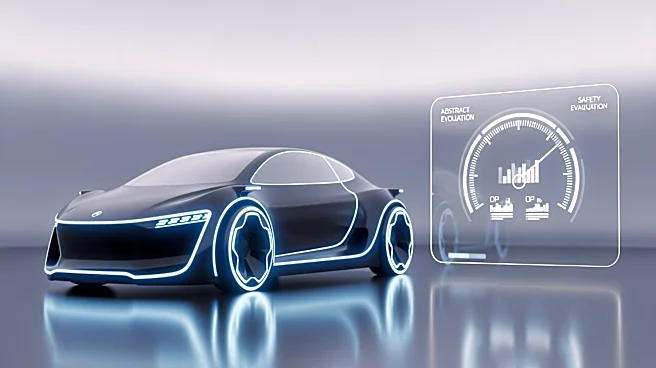
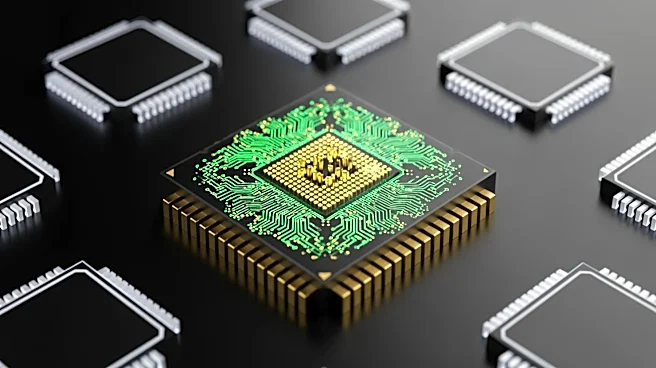
QCraft has showcased its urban Navigate-on-Autopilot (NOA) system using Qualcomm's SA8650P Snapdragon Ride platform in production vehicles. This demonstration occurred at Qualcomm's Automotive Technology and Cooperation Summit in Wuxi, China, where attendees
experienced live test rides in vehicles equipped with the SA8650P chip navigating real urban traffic. The vehicles successfully managed complex driving scenarios such as unprotected left turns and mixed pedestrian and vehicle traffic. This milestone follows a strategic partnership formed between QCraft and Qualcomm in September 2025. QCraft has completed development and on-road validation of its NOA system on two Snapdragon Ride platforms, with global deliveries planned for 2026. The company is leveraging fleet data to support its mass-production push, with its QPilot assisted-driving system already shipped on nearly 30 production models.
Why It's Important?
The demonstration marks a significant step forward in the autonomous driving industry, highlighting the potential for Qualcomm's Snapdragon Ride platform to support city-level assisted driving. This development positions QCraft as a competitive player in the autonomous vehicle market, which is increasingly seen as a major application of physical AI. The successful demonstration underscores Qualcomm's ambitions in the automotive sector, where it competes with companies like Nvidia and Horizon Robotics. The move towards mass production of QCraft's Qualcomm-based solutions by 2026 could accelerate the adoption of autonomous driving technologies, potentially reducing traffic accidents and enhancing urban mobility.
What's Next?
QCraft plans to continue its development efforts, with a higher-compute solution based on Qualcomm's QAM8797P platform currently in joint development. The company aims to maintain its schedule for global mass production in 2026. As the industry reaches an inflection point, QCraft's focus on general-purpose physical AI and reinforcement learning could drive further innovations in autonomous driving. Stakeholders, including automotive manufacturers and technology companies, will likely monitor these developments closely as they consider partnerships and investments in autonomous vehicle technologies.