







What's Happening?
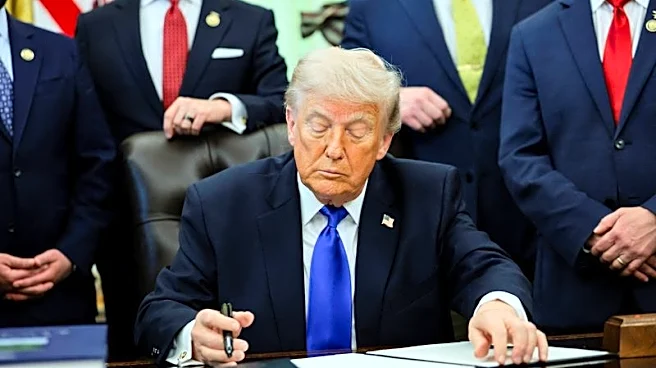
The Trump administration has introduced a new website, TrumpIRA.gov, which aims to provide certain Americans with up to $1,000 annually in government-matched retirement savings. This initiative is part of an executive order signed to expand access to individual
retirement accounts (IRAs). The website serves as an online marketplace where individuals without employer-sponsored retirement plans can compare and enroll in private-sector IRAs. This move aligns with the federal 'Saver’s Match' program, established under the 2022 SECURE 2.0 law during the Biden administration, which replaces a tax credit with direct government contributions to qualifying retirement accounts. Eligible low-income workers contributing to an IRA, Roth IRA, or 401(k) can receive a federal match of up to $1,000 per year. The TrumpIRA site is designed to assist approximately 50 million Americans lacking workplace retirement plans in navigating private options and accessing the match more easily. The site is expected to launch before the Saver’s Match takes effect in January 2027.
Why It's Important?
This development is significant as it addresses the retirement savings gap for millions of Americans who do not have access to employer-sponsored retirement plans. By facilitating easier access to private-sector IRAs and providing a government match, the initiative aims to enhance financial security for low-income workers. The program could potentially increase retirement savings participation rates, thereby reducing future financial strain on social safety nets. The initiative also reflects a broader governmental effort to encourage personal savings and financial planning, which could have long-term positive effects on the economy by increasing consumer confidence and spending power among retirees.
What's Next?
The TrumpIRA site is set to launch ahead of the Saver’s Match program's implementation in January 2027. As the site becomes operational, it will be crucial for the Treasury Department to effectively vet and list qualifying accounts offered by private financial institutions. The success of this initiative will depend on its ability to reach and engage the target demographic of low-income workers. Additionally, financial institutions and retirement plan providers may need to adjust their offerings to align with the new government guidelines and attract eligible participants. Monitoring the program's uptake and impact on retirement savings will be essential for assessing its effectiveness.