
What's Happening?
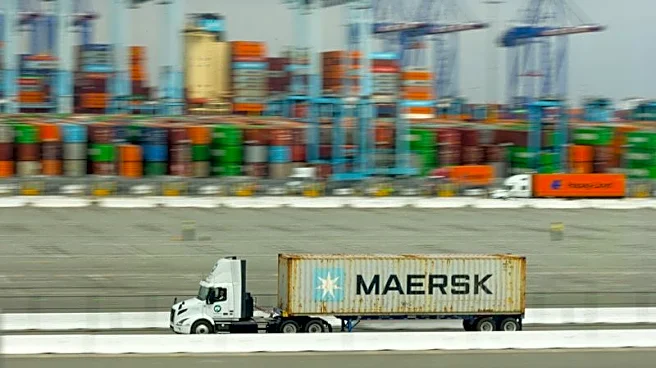
Maersk CEO Vincent Clerc has issued a warning regarding the escalating impact of the U.S.-Iran conflict on global shipping costs. Speaking to CNBC, Clerc highlighted that the ongoing war has created significant
cost pressures for the shipping industry, which are expected to intensify in the coming months. Maersk, a major player in global trade, reported a sharp decline in profitability and noted that the conflict in the Middle East is exacerbating these challenges. The company is facing increased oil costs, with prices hovering around $100 per barrel, leading to an estimated $500 million in additional monthly expenses. Clerc emphasized the necessity of passing these costs onto customers, as the company cannot absorb such a substantial increase. The conflict has also raised concerns about potential demand destruction at the consumer level, which could further impact the global supply chain.
Why It's Important?
The warning from Maersk's CEO underscores the broader economic implications of the U.S.-Iran conflict, particularly for the shipping industry. As a highly energy-intensive sector, shipping is directly affected by fluctuations in oil prices, which are currently elevated due to the conflict. This situation not only increases operational costs for shipping companies but also has the potential to drive up prices for consumers, contributing to inflationary pressures in various economies. The potential for reduced consumer demand due to higher costs could lead to a slowdown in global trade, affecting industries reliant on international supply chains. The situation highlights the vulnerability of global trade to geopolitical tensions and the need for strategies to enhance supply chain resilience.
What's Next?
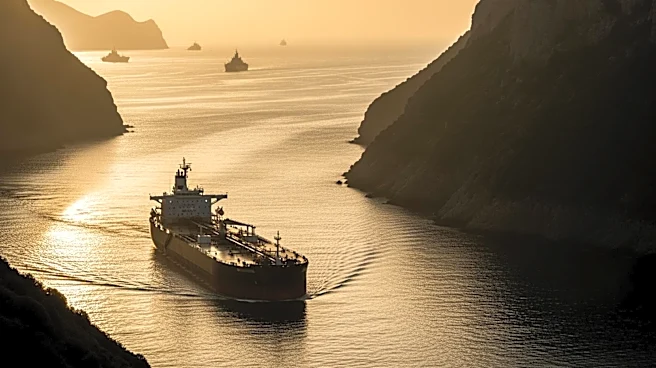
As the conflict continues, stakeholders in the shipping industry and global trade will be closely monitoring developments. Any resolution or escalation in the U.S.-Iran conflict could significantly impact oil prices and, consequently, shipping costs. Companies may need to explore alternative routes or strategies to mitigate the impact of the conflict on their operations. Additionally, governments and international organizations might consider diplomatic efforts to stabilize the region and reduce the economic fallout. The industry will also be watching for signs of consumer demand changes, which could alter the dynamics of global trade in the latter half of the year.