








What's Happening?
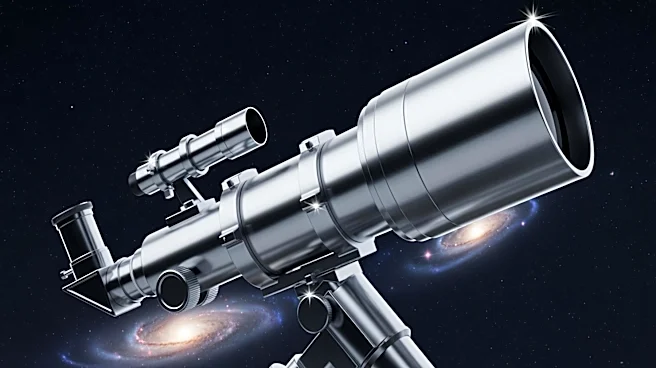
Telescope manufacturer Vaonis has introduced two new models in its Vespera line of smart telescopes, the Vespera III and Vespera Pro 2. These models are designed to offer improved night sky viewing experiences with enhanced optical features. The Vespera III and Pro 2 boast
advancements in optical design that aim to increase color contrast, reduce chromatic aberration, and provide edge-to-edge sharpness, making them suitable for astrophotography. These smart telescopes are equipped with built-in image sensors and automatic mounts controlled via smartphone apps, allowing users to easily locate and photograph celestial objects. The Vespera III is priced at $2,490, while the Vespera Pro 2 is available for $2,990, positioning them as high-end options in the smart telescope market.
Why It's Important?
The introduction of the Vespera III and Vespera Pro 2 highlights the growing trend and demand for smart telescopes, which simplify the process of stargazing and astrophotography for amateur astronomers. These models cater to a niche market of enthusiasts who seek advanced features without the complexity of manual telescope setups. The enhancements in optical technology and user-friendly features could attract more individuals to the hobby, potentially expanding the market for smart telescopes. Vaonis, along with competitors like Unistellar and Celestron, is contributing to the evolution of amateur astronomy by making it more accessible and appealing to a broader audience.
What's Next?
As the smart telescope market continues to grow, it is likely that more companies will invest in developing similar technologies, potentially leading to increased competition and innovation. Vaonis may continue to refine its product offerings, possibly introducing additional features or models to cater to different segments of the market. The success of the Vespera III and Pro 2 could influence other manufacturers to enhance their own products, driving further advancements in the field of amateur astronomy.
Beyond the Headlines
The development of smart telescopes like the Vespera III and Pro 2 raises questions about the future of traditional telescope use. As technology continues to advance, there may be a shift in how amateur astronomers engage with the night sky, relying more on automated systems rather than manual observation techniques. This could lead to a cultural shift in the hobby, where the focus moves from technical skill in operating telescopes to the enjoyment of capturing and sharing celestial images.