








What's Happening?
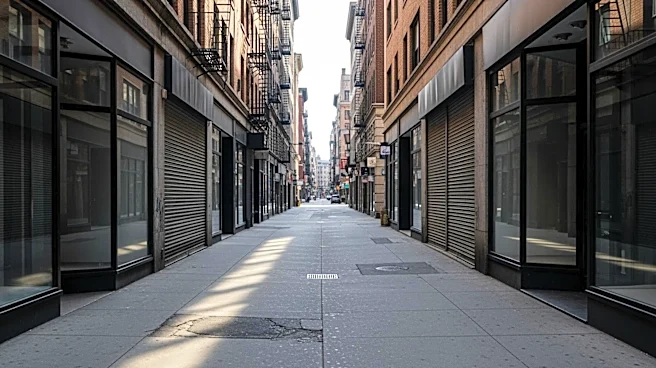
A recent report by New York City's Comptroller Mark Levine highlights ongoing challenges with storefront vacancies in several neighborhoods, despite a general recovery from pandemic-induced economic downturns. The report, titled 'Who’s Minding the Storefront?
An Analysis of Storefront Vacancies,' reveals that while the citywide vacancy rate has improved to 11% as of April 2026, certain areas like Lower Manhattan, Battery Park City, and parts of Brooklyn and Queens still experience vacancy rates exceeding 20%. The report notes that the pandemic significantly impacted retail businesses, with vacancy rates peaking at 11.6% in late 2023. Although there has been some recovery, the rebound has been uneven, with some neighborhoods struggling to return to pre-pandemic levels. The report also identifies that vacancies tend to cluster, with storefronts near vacant businesses more likely to remain unoccupied.
Why It's Important?
The persistence of high storefront vacancy rates in key New York City neighborhoods underscores significant economic challenges that could affect the city's overall economic health and vibrancy. High vacancy rates can lead to reduced foot traffic, impacting local businesses and potentially leading to further economic decline in affected areas. The report suggests that understanding the drivers and impacts of these vacancies is crucial for policymakers aiming to revitalize these neighborhoods. The findings also highlight the importance of supporting small businesses, which are vital to the city's economic ecosystem. The report's insights could guide future interventions to foster a more resilient and diverse retail environment, crucial for sustaining New York City's status as a global economic hub.
What's Next?
To address the uneven recovery and persistent vacancies, the report suggests that policymakers and stakeholders need to develop a comprehensive understanding of the factors contributing to storefront vacancies. This could involve targeted interventions to support small businesses and encourage new enterprises in high-vacancy areas. Additionally, initiatives like the partnership with the Hebrew Free Loan Society, which offers interest-free loans to small businesses, could provide much-needed financial support to entrepreneurs, helping them overcome barriers to entry and sustain operations. These efforts could be pivotal in revitalizing commercial corridors and ensuring long-term economic stability in New York City.