






What's Happening?
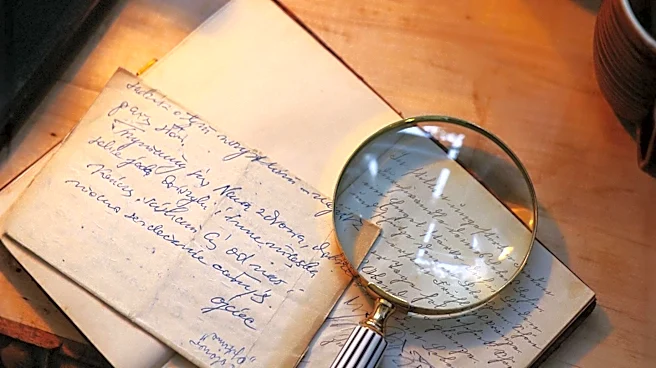
The Scribe AI tool from MyHeritage has successfully translated the earliest surviving Valentine written in English, a letter from Margery Brews to her fiancé John Paston in 1477. This letter is part of the Paston letters, a collection of over 1,000 documents
providing insights into the lives of England's gentry. The AI tool offers a full transcript and historical context, making Middle English more accessible to modern readers. This technological advancement allows genealogists and historians to explore historical texts without needing to decipher complex scripts manually.
Why It's Important?
The use of AI in translating historical documents represents a significant advancement in the field of genealogy and historical research. By automating the translation process, AI tools like Scribe AI enable researchers to focus on analysis and interpretation rather than transcription. This development enhances the accessibility of historical texts, allowing a broader audience to engage with historical narratives. It also demonstrates the potential of AI to revolutionize the study of history, providing new insights into past societies and cultures.
Beyond the Headlines
The application of AI in historical research raises questions about the accuracy and reliability of machine translations. While AI can expedite the translation process, it is essential to ensure that the nuances of historical language are preserved. This technology also highlights the ethical considerations of using AI in cultural heritage preservation, as it may influence how historical narratives are constructed and understood. As AI continues to evolve, researchers must balance technological advancements with the integrity of historical scholarship.