


What's Happening?
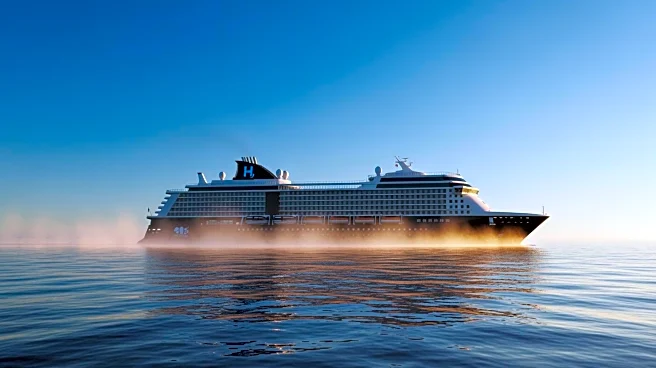
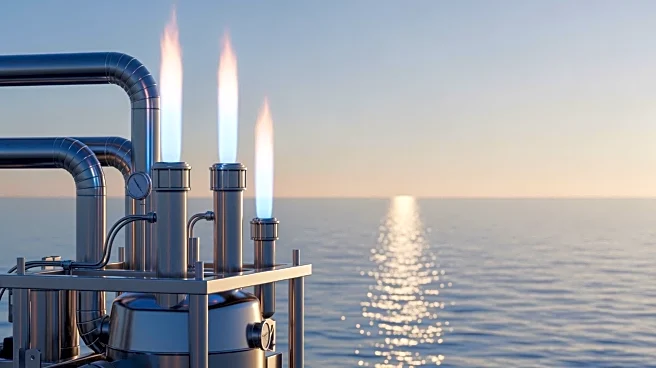
Fincantieri has launched the world's first hydrogen-powered cruise ship, Viking Libra, at its Ancona shipyard in Italy. The ship, built for Viking, features a hybrid propulsion system that incorporates liquefied hydrogen and fuel cells, enabling zero-emission
operations in certain conditions. This development is part of a broader shift among cruise operators towards alternative fuels, driven by increasing regulatory pressures in key markets like Europe. The ship is expected to be delivered in late 2026 and will accommodate up to 998 passengers.
Why It's Important?
The launch of Viking Libra represents a significant milestone in the maritime industry's transition to sustainable energy sources. As environmental regulations tighten, the adoption of hydrogen fuel technology could allow cruise ships to access environmentally sensitive regions, which are currently restricted to conventional vessels. This shift not only aligns with global decarbonization goals but also positions Fincantieri and Viking as leaders in sustainable maritime innovation. The success of this project could influence other shipbuilders and operators to invest in similar technologies, potentially transforming the industry.
What's Next?
Fincantieri plans to continue investing in its Ancona facility to expand production capacity and enhance efficiency through advanced technologies. The company aims to roll out its 'Operations Excellence' program, integrating automation and artificial intelligence to improve productivity. As the maritime industry continues to explore alternative fuels, stakeholders will be watching closely to see how hydrogen technology performs in real-world conditions. The success of Viking Libra could lead to further collaborations and innovations in sustainable shipbuilding.