










What's Happening?
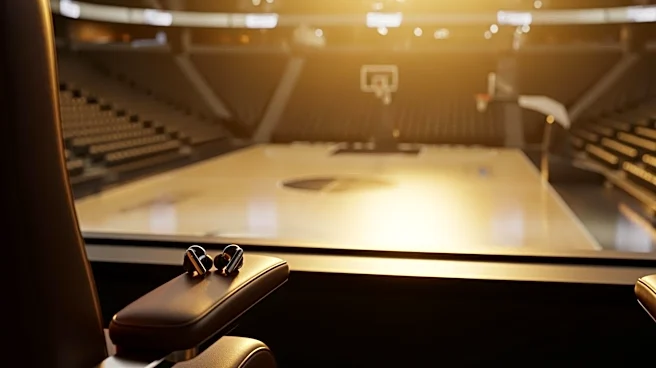
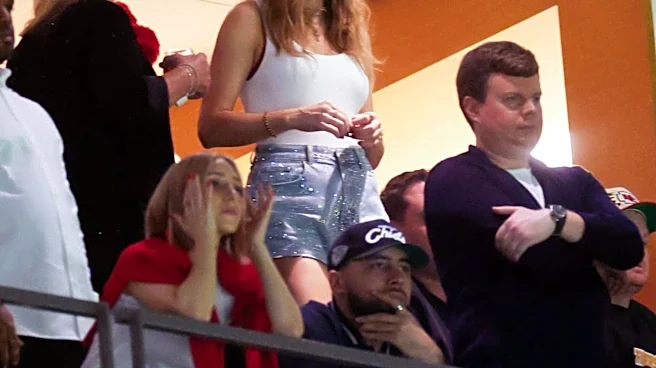
A courtside chair associated with Taylor Swift, used during Game 3 of the NBA Eastern Conference Finals between the New York Knicks and the Cleveland Cavaliers, was sold at auction for $7,000. The auction, conducted by The Realest platform, featured memorabilia
from the series, including items linked to other celebrities like Kylie Jenner, Travis Kelce, and Timothée Chalamet. The chair, although not directly named after Swift in the auction description, was identified by media outlets as the one she used, leveraging her status as a 14-time Grammy Award winner to enhance its value. The auction attracted 40 bids, underscoring the high demand for items connected to high-profile figures.
Why It's Important?
The sale of Taylor Swift's chair for $7,000 illustrates the significant impact of celebrity association on the value of sports memorabilia. This trend reflects a broader shift in the market where items gain value not just from their direct connection to sports events but also from their association with popular culture figures. The auction's success highlights the intersection of sports, entertainment, and consumer culture, where celebrity presence can elevate the perceived worth of otherwise ordinary items. This phenomenon benefits sports organizations by creating additional revenue streams and engaging a wider audience beyond traditional sports fans.
What's Next?
The success of this auction may encourage sports organizations to further explore the monetization of memorabilia linked to celebrity appearances. As the market for such items grows, there could be increased emphasis on authentication and provenance to ensure the credibility of these collectibles. This trend might also lead to more strategic partnerships between sports teams and platforms like The Realest, aiming to capitalize on the cultural and financial potential of celebrity-linked memorabilia.
Beyond the Headlines
The auction of Taylor Swift's chair raises questions about the ethical implications of commodifying every aspect of sports events. While it offers financial benefits, it also blurs the line between genuine memorabilia and commercial exploitation. This development could influence how sports events are marketed, potentially prioritizing celebrity involvement over athletic achievement. Additionally, it highlights the role of media narratives in shaping the value of collectibles, where the story behind an item can be as important as the item itself.