



What's Happening?
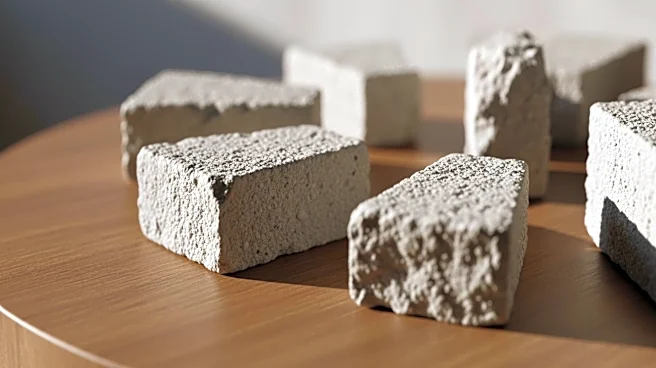
A recent study published in Scientific Reports explores the use of secondary recycled concrete in construction, demonstrating its feasibility when the replacement ratio is limited to 50%. The research investigates the mechanical and durability properties
of concrete made with natural, recycled, and secondary-recycled aggregates. While secondary recycled concrete shows reduced crack resistance and durability, it offers a sustainable option for reducing construction waste. The study provides insights into the potential for multiple recycling cycles, supporting the development of circular construction practices.
Why It's Important?
The construction industry faces significant challenges related to waste management and resource conservation. Secondary recycled concrete offers a promising solution by enabling the reuse of construction materials, reducing the need for new resources, and minimizing waste. This approach aligns with the principles of a circular economy, promoting sustainability and environmental responsibility. By demonstrating the viability of secondary recycled concrete, the study encourages the adoption of innovative recycling practices in the construction sector, potentially leading to reduced environmental impact and resource consumption.
What's Next?
Further research is needed to optimize the use of secondary recycled concrete in construction, focusing on improving its mechanical and durability properties. Collaboration with industry stakeholders could facilitate the development of standards and guidelines for its application. As the construction industry increasingly embraces sustainable practices, secondary recycled concrete could become a key component of circular construction strategies. Continued innovation and investment in recycling technologies will be essential to fully realize the potential of this approach, contributing to a more sustainable built environment.