





What's Happening?
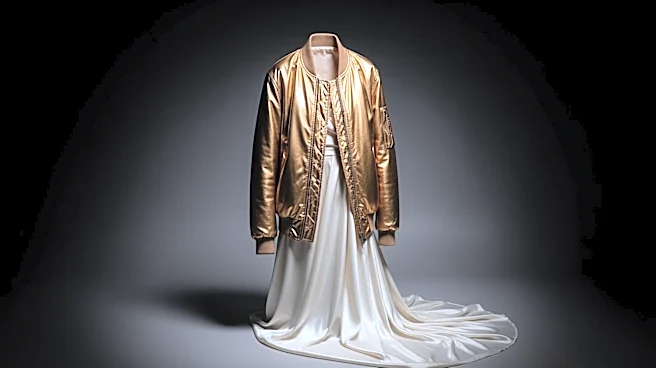
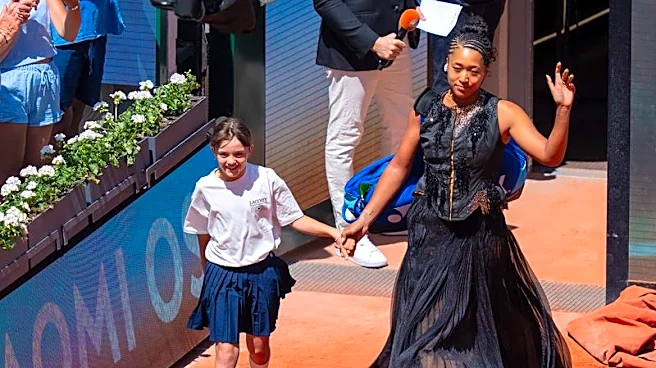
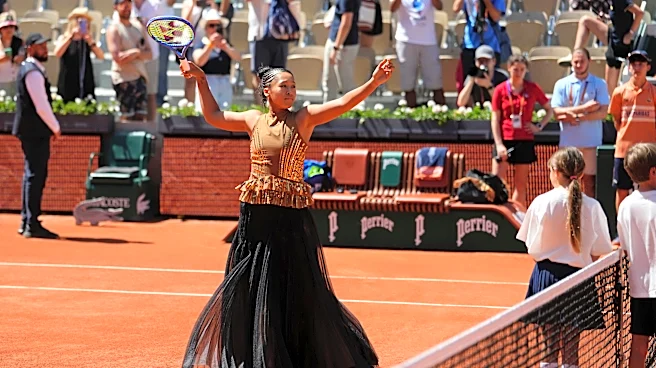
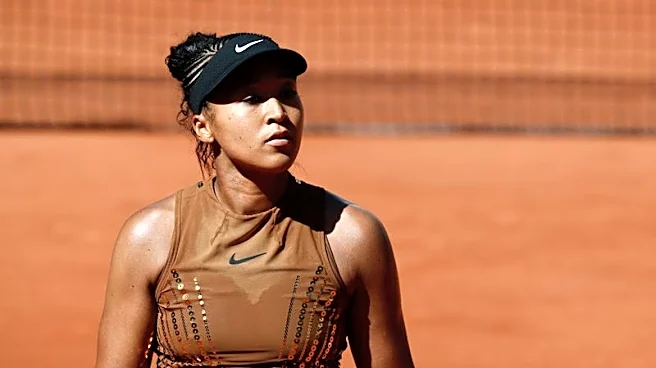
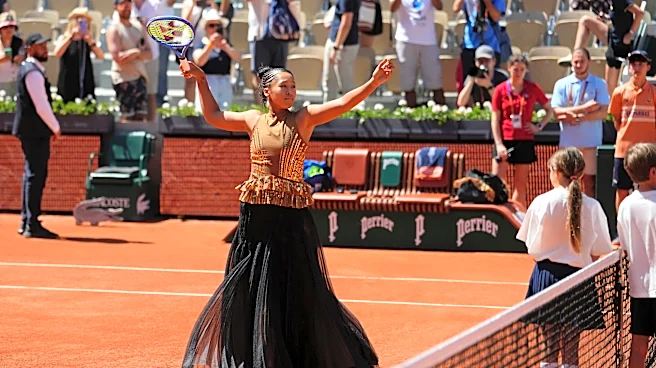
Naomi Osaka, a prominent tennis player, made headlines with her fashion choice during her second-round match at Roland-Garros against Donna Vekic. Osaka wore a metallic gold bomber jacket over a sequined gold playing dress, complemented by an ivory train,
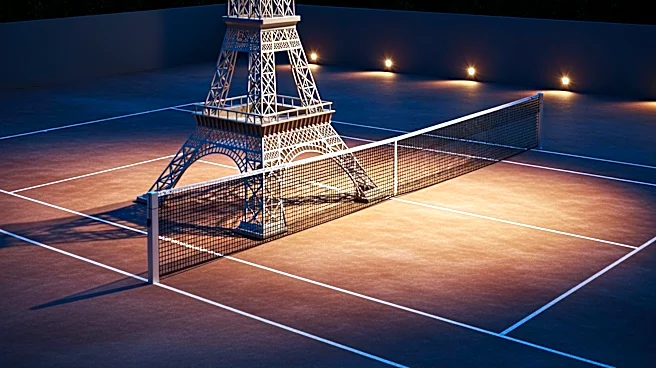
blending sportswear with couture. This outfit followed her first-round ensemble of a black skirt and gold dress, which she likened to the Eiffel Tower sparkling at night. While Osaka enjoys keeping fans guessing with her on-court outfits, her fashion choices have sparked debate. Laura Siegemund, whom Osaka defeated in the first round, criticized the extra time Osaka took to prepare due to her outfits, suggesting it exemplifies preferential treatment for big names in tennis. Despite the controversy, Osaka has performed well, securing straight-set victories in both her matches.
Why It's Important?
Osaka's fashion choices at Roland-Garros highlight the intersection of sports and personal branding, where athletes use their platform to express individuality. This trend reflects a broader shift in sports culture, where personal style and performance coexist. However, it also raises questions about fairness and consistency in tennis regulations, as some players feel that high-profile athletes receive preferential treatment. The debate underscores the tension between maintaining traditional sports etiquette and embracing modern expressions of individuality. This situation could influence how tennis authorities address similar issues in the future, potentially leading to discussions about standardizing preparation times and ensuring equal treatment for all players.
What's Next?
The ongoing discussion about Osaka's fashion choices may prompt tennis governing bodies to review and possibly revise rules regarding player preparation times and attire. Stakeholders, including players, sponsors, and fans, might engage in conversations about balancing individuality with fairness in the sport. As Osaka continues her journey at Roland-Garros, her performance and fashion choices will likely remain under scrutiny, influencing public and official perceptions of tennis etiquette. The outcome of these discussions could set precedents for how similar situations are handled in future tournaments.