





What's Happening?
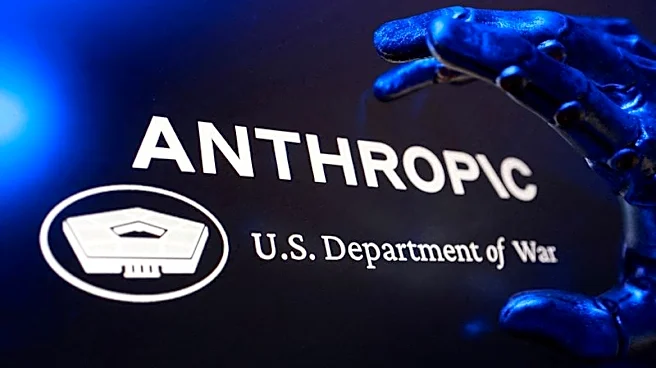
A federal appeals court in Washington, DC, has denied Anthropic's request to temporarily block the Pentagon's blacklisting of its AI technology. The San Francisco-based AI firm is engaged in a legal battle with the Department of War, challenging its designation
as a supply-chain risk. Anthropic claims this designation is retaliatory, following its efforts to prevent the government from using its technology for mass surveillance and weaponry. The court acknowledged that Anthropic might suffer financial harm but emphasized that the government's need to secure AI technology during military operations takes precedence. Despite the setback, Anthropic remains optimistic about resolving the issue swiftly, as the court recognized the need for expedited proceedings.
Why It's Important?
The court's decision underscores the tension between private tech companies and government agencies over the use of AI technology in national security. The ruling highlights the government's authority in managing military operations and securing technology, which could set a precedent for future cases involving tech firms and government contracts. For Anthropic, the blacklisting poses significant financial risks and limits its ability to work with the Department of War, potentially affecting its business operations and partnerships. The case also raises questions about the balance between national security and corporate rights, particularly concerning the use of AI in sensitive government functions.
What's Next?
Anthropic plans to continue its legal challenge against the Pentagon's designation, seeking to overturn the supply-chain risk label. The company aims to work productively with the government to ensure the safe and reliable use of AI technology. Meanwhile, the Pentagon's decision to blacklist Anthropic has opened opportunities for competitors like OpenAI, which has secured a deal to provide AI services to the government. The outcome of this legal battle could influence future government contracts and the role of AI in national security, potentially affecting other tech companies in similar situations.