




What's Happening?
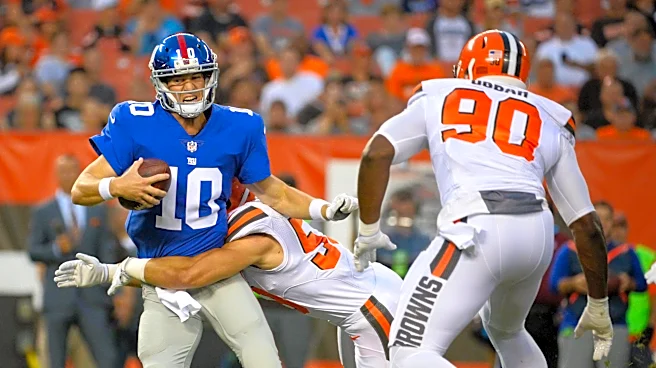
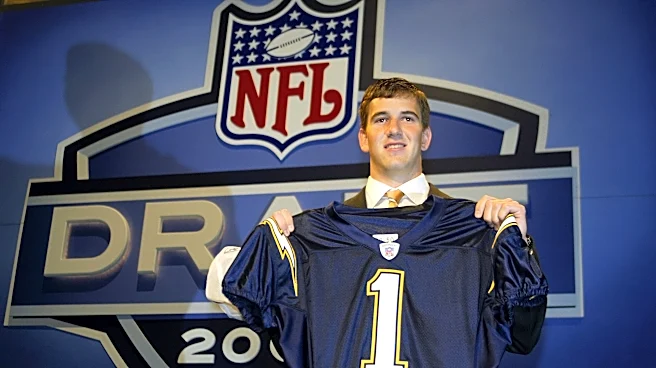
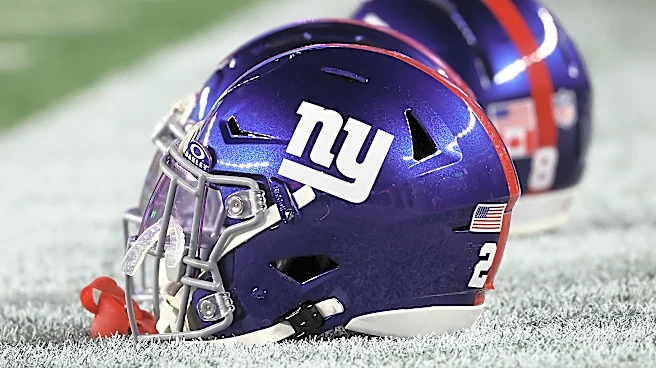
Eli Manning recently shared insights into his decision to refuse to play for the San Diego Chargers during the 2004 NFL Draft. Manning, who was the first overall pick, was traded to the New York Giants after expressing his unwillingness to join the Chargers.
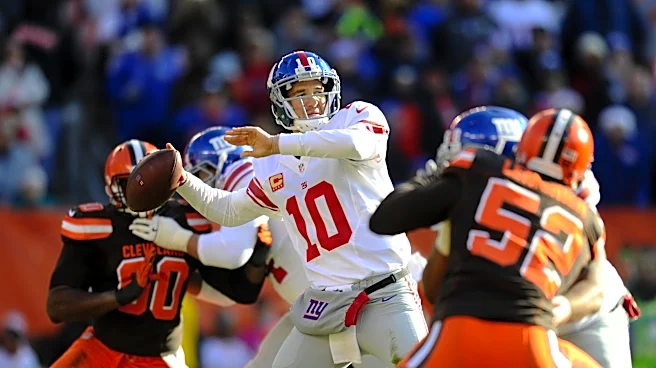
He clarified that the decision was his own, not influenced by his father, Archie Manning, despite public perception at the time. Eli Manning's choice led to significant changes for the Chargers, who went on to make the playoffs in five of the next six seasons. The Chargers, who later moved to Los Angeles, became a more competitive team, featuring players like Philip Rivers, LaDainian Tomlinson, and Antonio Gates. Manning's decision ultimately benefited his career, as he won two Super Bowl MVPs with the Giants.
Why It's Important?
Eli Manning's decision to avoid playing for the Chargers had a lasting impact on both his career and the franchise. For Manning, it led to a successful tenure with the New York Giants, highlighted by two Super Bowl victories. For the Chargers, the trade prompted a period of competitive success, as they built a strong team around Philip Rivers. This situation underscores the influence of player decisions on team dynamics and success in the NFL. It also highlights the role of player agency in shaping career trajectories and team fortunes, illustrating how individual choices can have ripple effects across the league.
What's Next?
While the events of the 2004 NFL Draft are long past, the reflections by Eli Manning may prompt further discussions about player autonomy and decision-making in professional sports. Teams and players might continue to evaluate how draft decisions and trades can impact long-term success. The Chargers' experience could serve as a case study for other franchises on how to respond to player rejections and build competitive teams. Additionally, Manning's comments may influence how future players approach draft negotiations and team selections.
Beyond the Headlines
Eli Manning's story also touches on the broader cultural and ethical considerations of player agency in sports. The narrative challenges the traditional power dynamics between teams and players, emphasizing the importance of personal choice and career satisfaction. It raises questions about the pressures athletes face from family, media, and public expectations, and how these factors influence their professional decisions. Manning's experience may encourage a reevaluation of how young athletes are advised and supported during critical career moments.