






What's Happening?
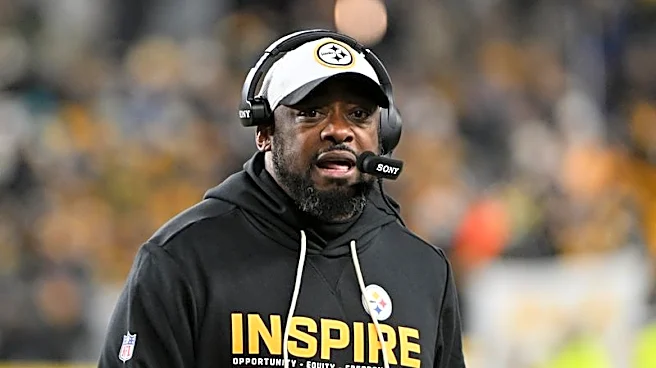
Mike Tomlin, the long-serving head coach of the Pittsburgh Steelers, has stepped down after 19 consecutive non-losing seasons. Tomlin, who did not hold a press conference or media tour, explained his decision during an NBC appearance, citing a personal
need for change and a belief that the team would benefit from new leadership. Under Tomlin's tenure, the Steelers last won a playoff game in the 2016 season, marking the longest streak without a postseason win since the franchise's early years. Tomlin's departure raises questions about the future direction of the team and whether new leadership can improve their playoff performance.
Why It's Important?
Tomlin's departure is a pivotal moment for the Pittsburgh Steelers, a team with a storied history in the NFL. His consistent performance over nearly two decades has set a high standard, and his exit could lead to significant changes in team dynamics and strategy. The decision also highlights the challenges of maintaining competitive performance in professional sports, where leadership changes can have profound impacts on team morale and success. For the Steelers, finding a successor who can match or exceed Tomlin's achievements will be crucial. This transition period will be closely watched by fans and analysts, as it could influence the team's future competitiveness in the league.
What's Next?
The Steelers will need to embark on a search for a new head coach who can build on Tomlin's legacy while addressing the team's recent playoff struggles. This process will involve evaluating potential candidates who can bring fresh perspectives and strategies to the team. The transition may also involve changes in coaching staff and player roles, as the new leadership seeks to implement their vision. Fans and stakeholders will be keenly observing how the team navigates this change and whether it leads to improved performance in future seasons.