
What's Happening?
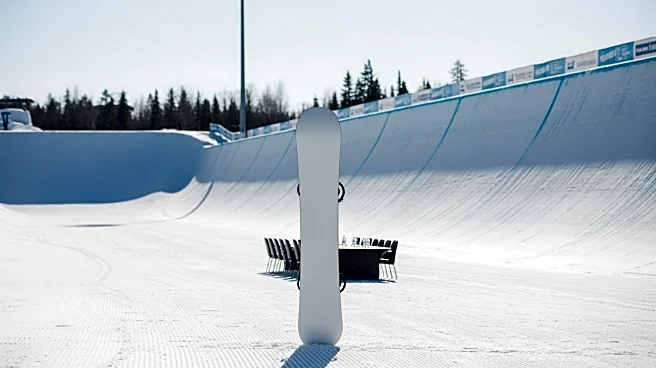
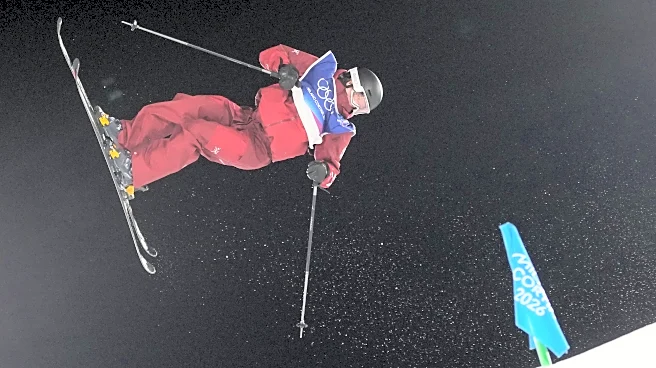
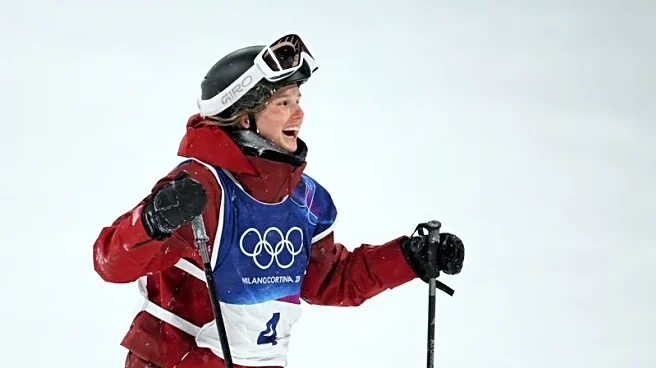
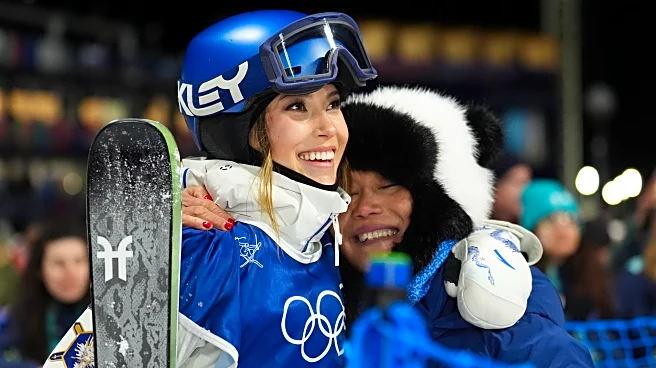
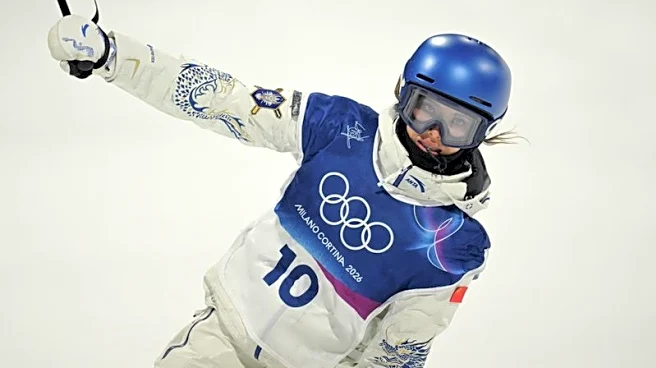
Eileen Gu, a prominent freestyle skier competing in the Winter Olympics, expressed disappointment over the scheduling of events that limit her training opportunities. Gu, who is participating in all three freestyle skiing disciplines—slopestyle, halfpipe, and big air—faces a scheduling conflict as the big air final coincides with the first halfpipe training session. Despite reaching out to the International Ski and Snowboard Federation (FIS) for accommodations, her request was denied to maintain fairness among athletes. Gu, who competes for China, has not trained on a halfpipe since December and is concerned about the impact on her performance. The FIS stated that while efforts were made to facilitate training, conflicts are sometimes unavoidable
for athletes competing in multiple events.
Why It's Important?
The situation highlights the challenges faced by multi-discipline athletes in major sporting events like the Olympics. Gu's case underscores the need for flexible scheduling to accommodate athletes who push the boundaries by competing in multiple events. This issue raises questions about fairness and the balance between maintaining a level playing field and supporting exceptional talent. The outcome of this situation could influence future Olympic scheduling policies and the support provided to athletes who choose to compete in multiple disciplines. It also reflects broader discussions about the role of international sports organizations in fostering talent and ensuring equitable competition conditions.
What's Next?
Gu will continue to compete in the big air final and prepare for the halfpipe qualifiers, despite the limited training time. The outcome of her performances may prompt further discussions among Olympic organizers and sports federations about scheduling practices. Stakeholders, including athletes, coaches, and sports officials, may advocate for changes to better accommodate athletes with demanding schedules. The resolution of this issue could set a precedent for future Olympic Games and influence how multi-discipline athletes are supported.