






What's Happening?
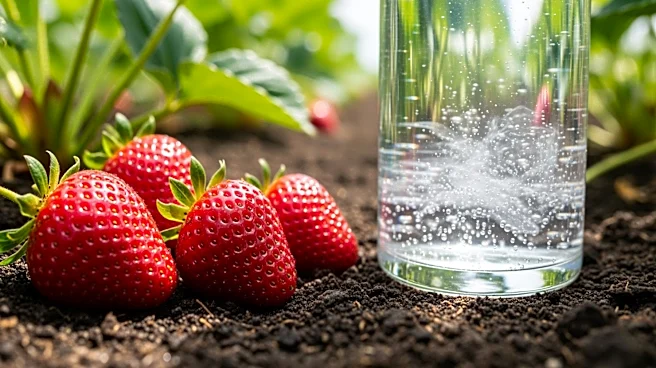
A large strawberry farm, Makin Soft Fruit, located in West Yorkshire, has adopted a new water conditioning technique to manage salt accumulation in its hydroponic growing system. The farm, which produces strawberries and raspberries, relies on rainwater
harvested from its buildings and yards, supplemented by borehole water when necessary. However, the borehole water contains high levels of salts, which can negatively impact plant health by increasing electrical conductivity (EC) in the growing substrate. Traditionally, the farm used calcium nitrate to flush the system and displace salts, but this method temporarily halts the supply of other essential nutrients. To address this, the farm has started using DeSaltus 2.0, a water conditioner that proactively increases the solubility of calcium, helping to displace sodium ions and improve nutrient uptake. This approach has shown promising results, reducing salt levels significantly and improving plant productivity.
Why It's Important?
The implementation of DeSaltus 2.0 at Makin Soft Fruit highlights the importance of innovative water management strategies in agriculture, particularly in regions facing water scarcity and quality issues. By effectively managing salt levels, the farm can maintain higher productivity and fruit quality, which is crucial for meeting market demands and sustaining profitability. This development is significant for the agricultural sector as it demonstrates a viable solution to a common problem faced by hydroponic and other water-reliant farming systems. The success of this technique could encourage other farms to adopt similar practices, potentially leading to broader improvements in agricultural efficiency and sustainability.
What's Next?
Following the successful trial of DeSaltus 2.0, Makin Soft Fruit plans to implement the water conditioner across its entire production. This decision represents a significant investment but is expected to ensure the consistent production of high-quality fruit. As the farm continues to monitor the effectiveness of this approach, it may provide valuable data and insights that could influence water management practices in the agricultural industry. Additionally, the farm's experience may prompt further research and development of similar technologies, potentially leading to more advanced solutions for managing water quality and nutrient uptake in various farming systems.