



What's Happening?
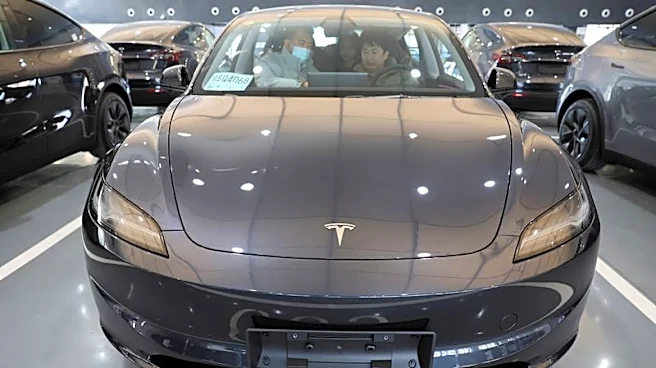
The Auto China 2026 event in Beijing showcased a wide array of electric vehicles (EVs), highlighting the differences between the Chinese and U.S. EV markets. The event featured numerous Chinese EV models, emphasizing sporty and luxurious designs, contrasting
with the U.S. market's focus. Discussions at the event noted that legacy automakers in China are concentrating on innovation rather than relying on historical brand prestige. The event also touched on the growing presence of Chinese EVs in regions like ASEAN and South America. The divergence between the U.S. and global markets is becoming more pronounced, with the U.S. market lagging in terms of variety and innovation.
Why It's Important?
The divergence in EV markets underscores the varying approaches to electric vehicle adoption and innovation globally. China's focus on a broad range of EV offerings, including luxury and sporty models, contrasts with the U.S. market, which is more conservative and slower to diversify. This difference could impact global market dynamics, as Chinese automakers continue to expand their influence and capture market share in emerging regions. The U.S. market may need to adapt to remain competitive, potentially leading to increased innovation and investment in EV technologies. This divergence also highlights the strategic importance of international auto shows in shaping industry trends and consumer perceptions.
Beyond the Headlines
The differences in market strategies between China and the U.S. reflect broader economic and cultural factors. China's rapid urbanization and government support for green technologies have accelerated EV adoption, while the U.S. faces challenges such as infrastructure development and consumer preferences. The focus on luxury and sporty EVs in China may also indicate a shift in consumer aspirations and lifestyle changes. As global markets continue to evolve, the U.S. may need to reassess its approach to EVs, considering factors like environmental policies and technological advancements to maintain its position in the global automotive industry.