

What's Happening?
General Motors and LG Energy Solution have announced plans to convert their jointly-operated battery plant in Tennessee to produce cells for energy storage systems (ESS). This move will involve recalling 700 workers who were laid off earlier this year.
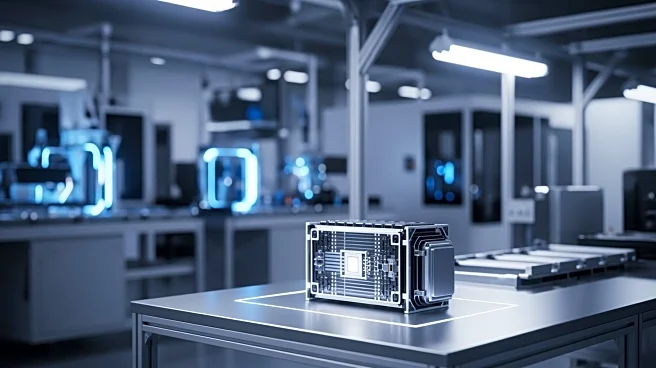
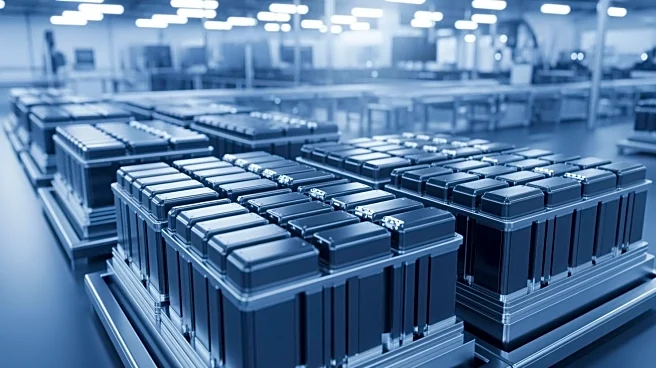
The conversion is part of a broader strategy by the two companies, operating through their Ultium Cells joint venture, to shift focus from electric vehicle (EV) batteries to energy storage solutions. The plant will begin producing lithium-iron-phosphate (LFP) batteries in the second quarter, which LG will supply to grid and data center customers. This retooling effort is expected to cost tens of millions of dollars and involves replacing equipment previously used for nickel-manganese-cobalt cells. The decision comes amid a realignment in the North American battery industry, driven by changing market demands and policy impacts from the Trump administration.
Why It's Important?
The shift by GM and LG Energy Solution to focus on energy storage systems reflects a significant trend in the battery industry. As demand for electric vehicles has been weaker than expected, partly due to high prices and limited infrastructure, companies are pivoting to meet the growing need for energy storage. This is particularly relevant as the U.S. installed 57.6 GWh of new energy storage capacity in 2025, a 30% increase from the previous year. The retooling of the Tennessee plant is part of a larger strategy by LG to reorient its North American manufacturing base, which includes similar conversions in Michigan, Ohio, and Canada. This move could potentially flood the market with energy storage products, but industry leaders like GM's Kurt Kelty believe that demand will continue to outstrip supply, driven by the energy needs of AI data centers.
What's Next?
The retooling of the Tennessee plant is expected to be completed by the second quarter, with workers returning by the end of April. This timeline is ahead of the previously anticipated July return. As the energy storage market continues to grow, other companies like SK On and Samsung SDI are also making similar transitions, indicating a broader industry shift. Tesla is also entering the energy storage market, having secured a deal with LG for production in Michigan. The success of these initiatives will depend on the continued growth of the energy storage market and the ability of companies to manage production costs and market saturation.