
What's Happening?
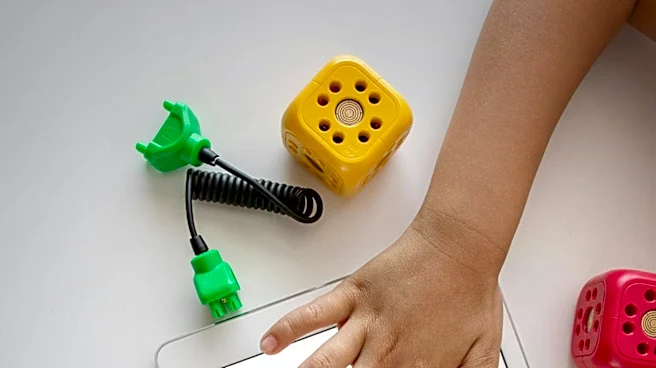
Lena Hall, a senior director of developer and AI strategy at Akamai Technologies, shared her experience of guiding her 5-year-old son in creating a game using OpenAI's Codex. The child, driven by curiosity,
used the voice-based coding tool to turn his ideas into a playable game. Hall emphasized the importance of setting clear boundaries to ensure AI is used as a tool to extend thinking rather than replace it. She highlighted the significance of children understanding AI as a tool created by humans, not as a friend or authority. The process involved the child articulating his ideas, refining them after feedback, and breaking the game into structured parts, which are essential skills for young learners.
Why It's Important?
This story underscores the growing role of AI in education and child development. By introducing AI tools in a controlled and educational manner, children can develop critical thinking and problem-solving skills. The approach taken by Hall demonstrates how AI can be integrated into learning without overshadowing the child's natural curiosity and creativity. This method of learning through play can lead to deeper absorption of skills and concepts, fostering a generation that is both technologically savvy and critically aware of the tools they use. It also raises important discussions about the ethical use of AI in early education and the need for parental guidance in navigating these technologies.